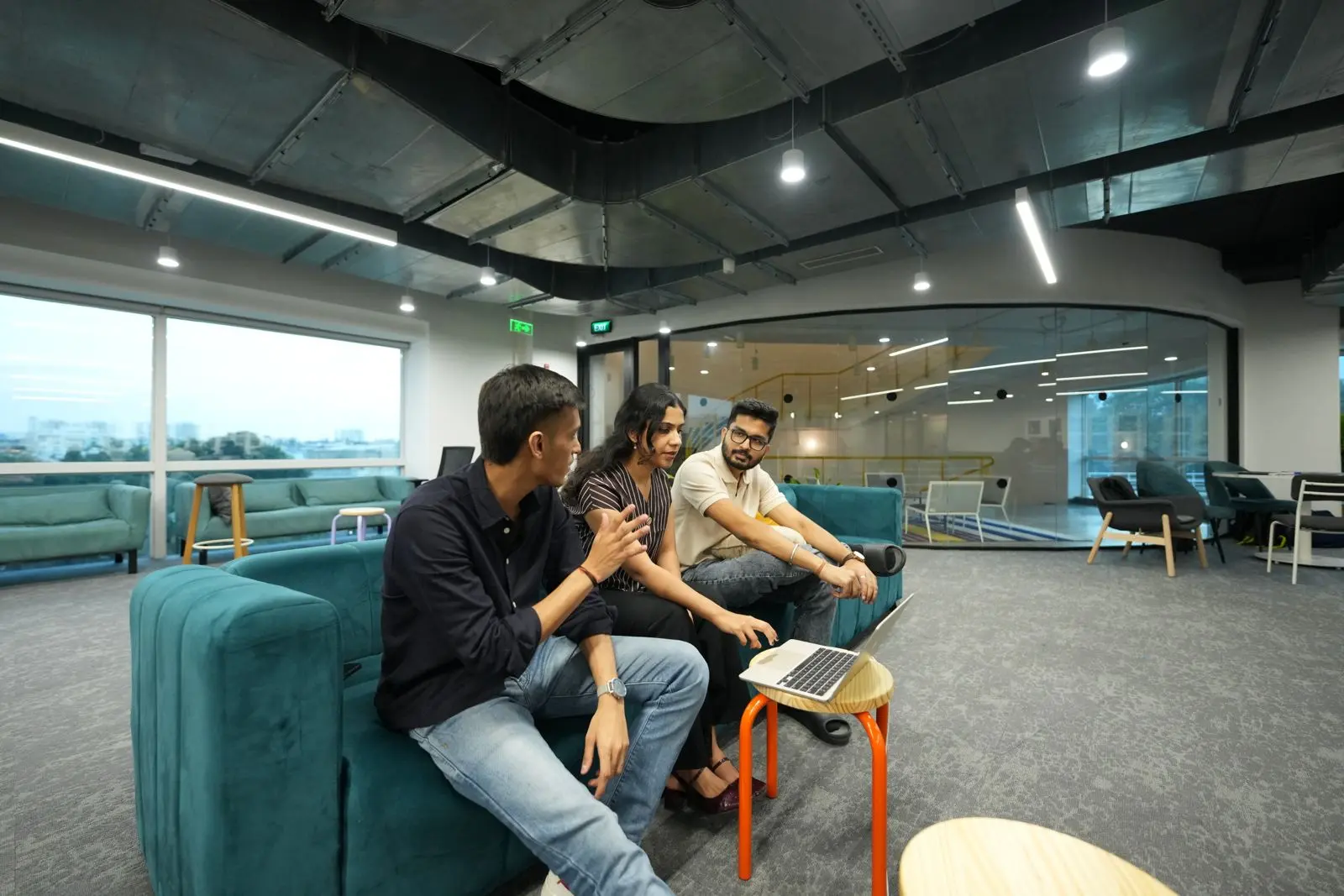
A 45-day full-time program at Mesa's Bangalore campus where you learn AI by building with it. 8 real projects on your GitHub, then your own product, pitched to 25+ VCs on Demo Day. You don't need to know how to code.
There is so much talent in our country, and most of it is being wasted on old curriculums where students sit in a class and give one exam after another. Twenty-year-olds in Silicon Valley are using AI to build amazing things. Ours are stuck, with no guidance and the wrong skills. If India wants to become a $10 trillion economy, we need to teach graduates how to build things. And this is the once-in-a-civilization moment for building, because AI has made it so simple. The knowledge gap between a software engineer from Stanford and a commerce graduate from India does not exist anymore. Both use Claude Code.
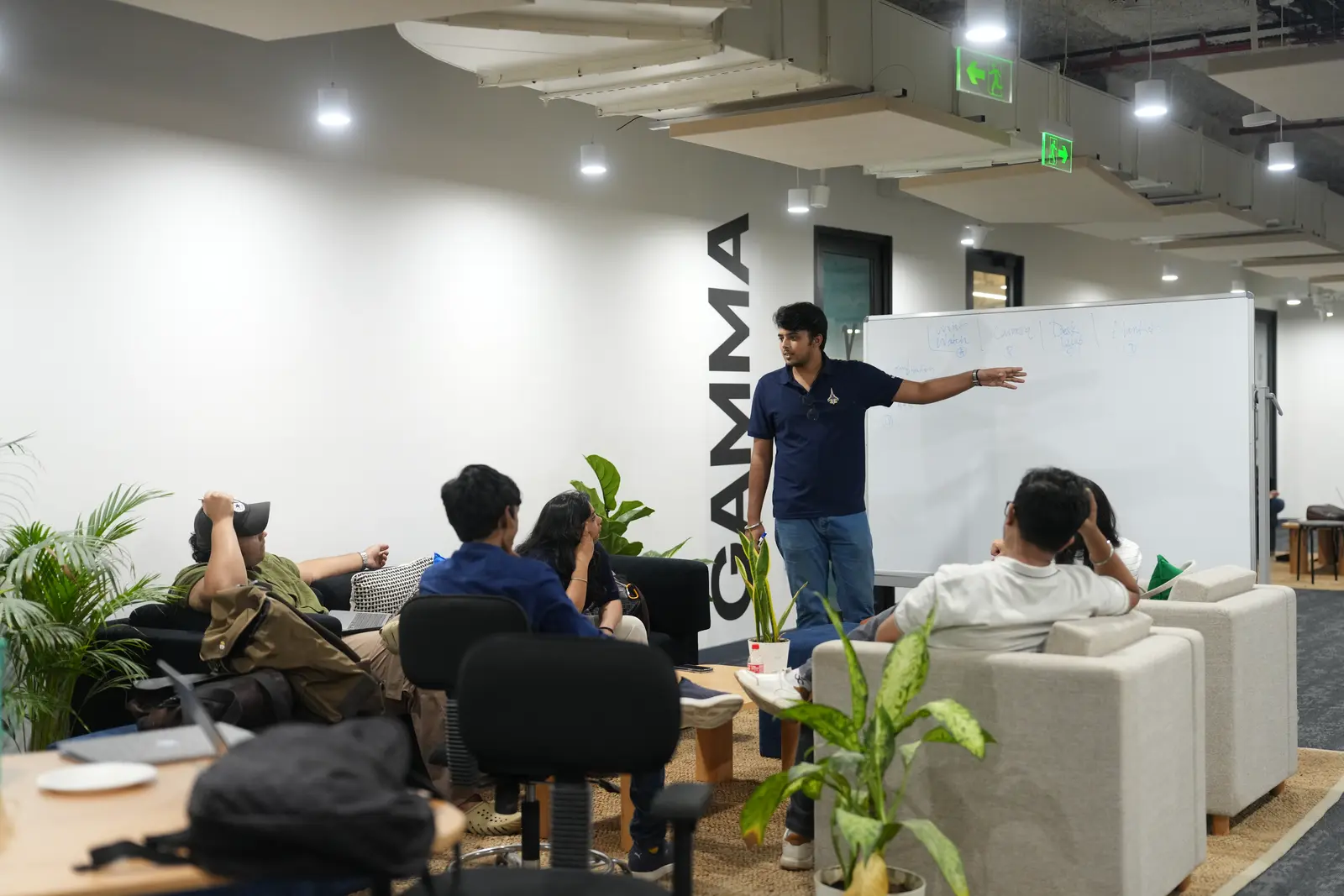
That is why Mesa is launching Arena 45: a 45-day full-time program at our Bangalore campus for graduates who want to learn AI by building with it. It starts with one week of online pre-work, so if you've never written code you're not behind on day one. Then 45 days on campus, Monday to Saturday. Every morning you're taught something, every afternoon you build something real. Two hackathons a week. Week 1, automations. Week 2, agents. Week 3, a full-stack product that can charge money. Week 4, a consumer product launched on Product Hunt, and you lock your problem and form your team. The next two weeks, that's all you do: your team, a mentor who has built with AI, one for every 10 students, and on day 45 you pitch to 25+ VCs at Demo Day.
A few things you should know. The program is full-time and offline, 12 hours a day, 6 days a week in Bangalore. It is not for job seekers; we don't offer placements. Getting in will be hard, because the quality of the cohort matters to us. The full curriculum is below, day by day. Go through it, and if it feels right, apply.
There is no orientation week. This is what happens in your first three days on campus.
Morning: how AI actually works. Afternoon: Claude Code, GitHub and Vercel. You go home with a website at a live URL.
Prompting for code, Git basics, debugging, deploying. And how to check what the AI gave you before you trust it.
Pick one thing you do every week. Build the tool that does it. Three-minute demo to your pod.
Six-day weeks, Sundays off. Four weeks of inputs with six hackathons, then two weeks where you only build. Every box is a day on campus.
All eight are public, deployed, and yours. Here they are in the order you build them.
Claude Code, Git, Vercel. Your first deploy, on day 2.
Triggers, webhooks, APIs. Then a workflow across Gmail, Slack and Sheets that a real person uses.
Give it a company name; it reads the site, LinkedIn, news, funding, and writes the report.
Tools, memory, evals, guardrails, MCP. Built and demoed by your pod in two days.

Schema, auth, storage, embeddings and RAG on Supabase.
Email, payments, analytics, a proper UI. Then you get strangers to sign up over the weekend.
Onboarding, paywall, instrumented funnel. The whole cohort launches together.
Two weeks with your team and a mentor. Real users. Then you pitch it to 25+ VCs.
Go through it, and if it feels right, apply. One row per day: what we cover, the tools, what you ship.
| Days | What we cover | Tools | What you ship | "I can now…" |
|---|---|---|---|---|
| Day 1-2Self-paced | How software works, for non-engineers: code, APIs, databases, servers. How the internet fits together. | - | Foundations module + quiz | "The jargon doesn't scare me anymore." |
| Day 3-4Self-paced | AI literacy: what LLMs actually are (tokens, training, context), prompting with intent, daily hands-on use. | ClaudeChatGPT | 10 real tasks done with AI, documented | "I use AI daily, with intent." |
| Day 5-7Self-paced | Builder stack setup, guided: accounts, GitHub profile, first hello-world deploy. | GitHubSupabaseVerceln8nClaude Code | Live GitHub profile + verified working stack | "My stack is ready. I've earned my seat." |
| Day | What we cover | Tools | What you ship | "I can now…" |
|---|---|---|---|---|
| Day 1 | How AI works under the hood: model behaviour, context windows, cost, failure modes. Claude Code day one: repos, commits, deploys. | Claude CodeGitHubVercel | Personal site deployed; first public commit | "I have a live website I built myself. On day 1." |
| Day 2 | Claude Code fundamentals: prompting for code, Git basics, debugging, deploying. How to evaluate AI output. | Claude CodeGit | Build #1: a web app, live on Vercel | "I can ship a web app without being a developer." |
| Day 3Hackathon 1 · 1 day | Ship a tool for yourself: pick one thing you do every week, build the tool that does it, live by 6 pm. 3-minute demos. | Your choice | A personal tool, shipped end to end in a day | "I built something useful in one day." |
| Day 4 | n8n deep dive: triggers, webhooks, APIs, error handling, scheduling, monitoring. | n8nREST APIs | First working automation, live before dinner | "I can automate any repetitive task." |
| Day 5-6Hackathon 2 · 2 days | Automate a real workflow: Gmail, Slack, Sheets, WhatsApp for a real person's process: a family business, a Mesa partner startup, a friend's job. Saturday 5 pm demos. | n8nGmail/Slack/SheetsWhatsApp | Build #2: a cross-tool automation someone runs on Monday | "I automated someone's actual job in 2 days." |
| Day 7Sunday | Rest day. Campus open for optional build. | - | - | - |
| Day | What we cover | Tools | What you ship | "I can now…" |
|---|---|---|---|---|
| Day 8 | Agent fundamentals: tools, memory, orchestration, system prompts. How models reason: context engineering, cost and latency trade-offs. | Claude APIAgent SDK | Build #3: a research agent that works autonomously | "I can build an AI that works on its own." |
| Day 9 | Multi-step agents: reliability, evals, guardrails. Evaluation as a durable skill: how to know if AI output is good. | Eval tooling | An agent using 2+ tools reliably, with an eval suite | "I can make agents reliable enough to trust with real work." |
| Day 10Hackathon 3 · 1 day | An agent that does a job: one task, end to end, no human in the loop, with an eval that proves it works. | Full agent stack | An agent completing a real task end to end | "My agent works without me." |
| Day 11 | Agents in the wild: MCP, connecting agents to email, Slack and data. Auth and permissions. | MCPSlack/Gmail | An agent working inside your daily tools | "I have an AI teammate inside my tools." |
| Day 12-13Hackathon 4 · 2 days | Agent-a-thon: pods build an agent product end to end: tools, memory, a UI, a user. Saturday 5 pm demos. | Full agent stack | Build #4: a complete agent product, built and demoed by your team | "My team shipped a working agent product in 2 days." |

| Day 14Sunday | Rest day. Campus open for optional build. | - | - | - |
| Day | What we cover | Tools | What you ship | "I can now…" |
|---|---|---|---|---|
| Day 15 | Databases with Supabase: schema design, auth, storage. Give AI your own data: embeddings and RAG basics. | Supabasepgvector | Build #5: an app with login, a database, and AI answering over its data | "I can build apps that remember users." |
| Day 16 | Product plumbing: transactional email, payments, analytics events. | ResendRazorpayPostHog | An app that can charge money | "I can build something people can actually pay for." |
| Day 17Hackathon 5 · 1 day | Redesign: UI/UX fundamentals, taste, component libraries, responsive design. Rebuild your strongest earlier build's interface. | FigmaTailwind / shadcnv0 | A full redesign of your strongest build, live | "My products finally look like real products." |
| Day 18 | B2B foundations: business workflows, roles and permissions, invoicing, admin dashboards. Data privacy and security basics. | Supabase RLSDashboards | A B2B tool skeleton (invoicing as the canonical build) | "I can build software businesses run on." |
| Day 19-20Hackathon 6 · 2 days | Ship a micro-SaaS in 2 days: login, database, payment, first external users by Saturday. Optional B2B brief from a real business (family business or Mesa partner startup). | Full product stack | Build #6: a micro-SaaS with first external users | "Strangers on the internet used something I built." |

| Day 21Sunday | Rest day. Campus open for optional build. | - | - | - |
| Day | What we cover | Tools | What you ship | "I can now…" |
|---|---|---|---|---|
| Day 22 | Consumer foundations: signup and login flows, onboarding, trial design, hard vs soft paywall. Choosing models: capability vs cost, when not to use AI. | Supabase Auth | A consumer app with a real signup-to-activation flow | "I can design flows that turn visitors into users." |
| Day 23 | Monetisation and analytics: payment page, trial-to-paid, usage analytics, retention hooks. Launch prep begins. | RazorpayPostHog | A live paywall + fully instrumented funnel | "I can see exactly how users behave, and where they pay." |
| Day 24Launch day | Public launch on Product Hunt: hunter outreach, assets, first-hour momentum. The whole cohort launches together. | Product Hunt | Build #7: your consumer app launched publicly, with real users | "I launched a product to the world, and real people signed up." |
| Day 25 | How to pick a problem: founder-market fit, service-as-wedge, validation through real conversations. | Validation frameworksCustomer interviews | 3 evidence-backed problem statements; 20 user conversations begun | "I know how to find problems worth solving." |
| Day 26 | First users and consumer love: concierge MVPs, things that don't scale, distribution wedges, pitch narrative. | Pitch craft | V1 pitch + a named list of committed first users | "I can get my first users and tell the story that wins them." |
| Day 27The Hinge | Idea lock. Team formation. Mentor attached to every product. 14-day sprint plan committed. | - | Locked idea, formed team, committed sprint plan | "I know exactly what I'm building for the next 2 weeks, and with whom." |
| Day 28Sunday | Rest day. Campus open for optional build. | - | - | - |
| Days | What happens | Support | What you ship | "I can now…" |
|---|---|---|---|---|
| Day 29-34Sprint week A | No lectures. Build, launch, get early users, fix what breaks. | Daily 30-min pod standupTwo 1:1 mentor sessionsEvening builder talks | v1 live with first users | "I ship every day." |
| Day 38Mid-sprint review | Every pod presents to mentors and Mesa founders. Honest feedback, then you re-plan. | Mentors + Mesa founders | A re-scoped plan for the last 6 days | "I can take feedback and change course quickly." |
| Day 36-41Sprint week B | Build. Get users, get feedback, keep shipping. | 1:1 mentorAsync office hours | Build #8: THE product: live, with users, traction and a story | "I'm not learning to build anymore. This is my product." |
| Day 43Portfolio day | All 8 READMEs finalised. GitHub profile audit: every repo explainable in 60 seconds. Portfolio site updated. | GitHub | 8 displayable projects; portfolio live | "My GitHub is my resume." |
| Day 44Dress rehearsal | Pitch, live demo, Q&A drills with mentors and Mesa faculty. | - | Your pitch, rehearsed | "I'm ready for the room." |
| Day | What happens | Who's in the room | What you ship | "I can now…" |
|---|---|---|---|---|
| Day 45Demo Day | Pitch your own product to investors with a live demo and real users. The cohort build wall, 800 projects across 100 people, goes up the same day. | 25+ VCsMesa foundersMentors | Your pitch, delivered to a room of investors | "I pitched my own product to 25+ VCs. Whatever happens next, I can build." |
One brief, one deadline, 100 people building in the same room. Demos at 5 pm on the day.
Pick one thing you do every week. Build the tool that does it. Live by 6 pm, 3-minute demo.

Gmail, Slack, Sheets, WhatsApp for a real person's process: a family business, a partner startup, a friend's job.

One task, end to end, no human in the loop, with an eval that proves it works.
Pods build an agent product end to end: tools, memory, a UI, a user. Saturday 5 pm demos.
Taste, component libraries, responsive design. Rebuild your strongest build's interface.
Login, database, payment, first external users by Saturday. Optional brief from a real business.
Six days a week on campus, Sundays off. This is how a normal day runs.
12 hours a day, 6 days a week, in Bangalore, for 45 days. Attendance is daily. If you're outside Bangalore, plan to move here for the program; a housing option is in the works.
Off. Campus is open for anyone who wants to keep building, and plenty do.
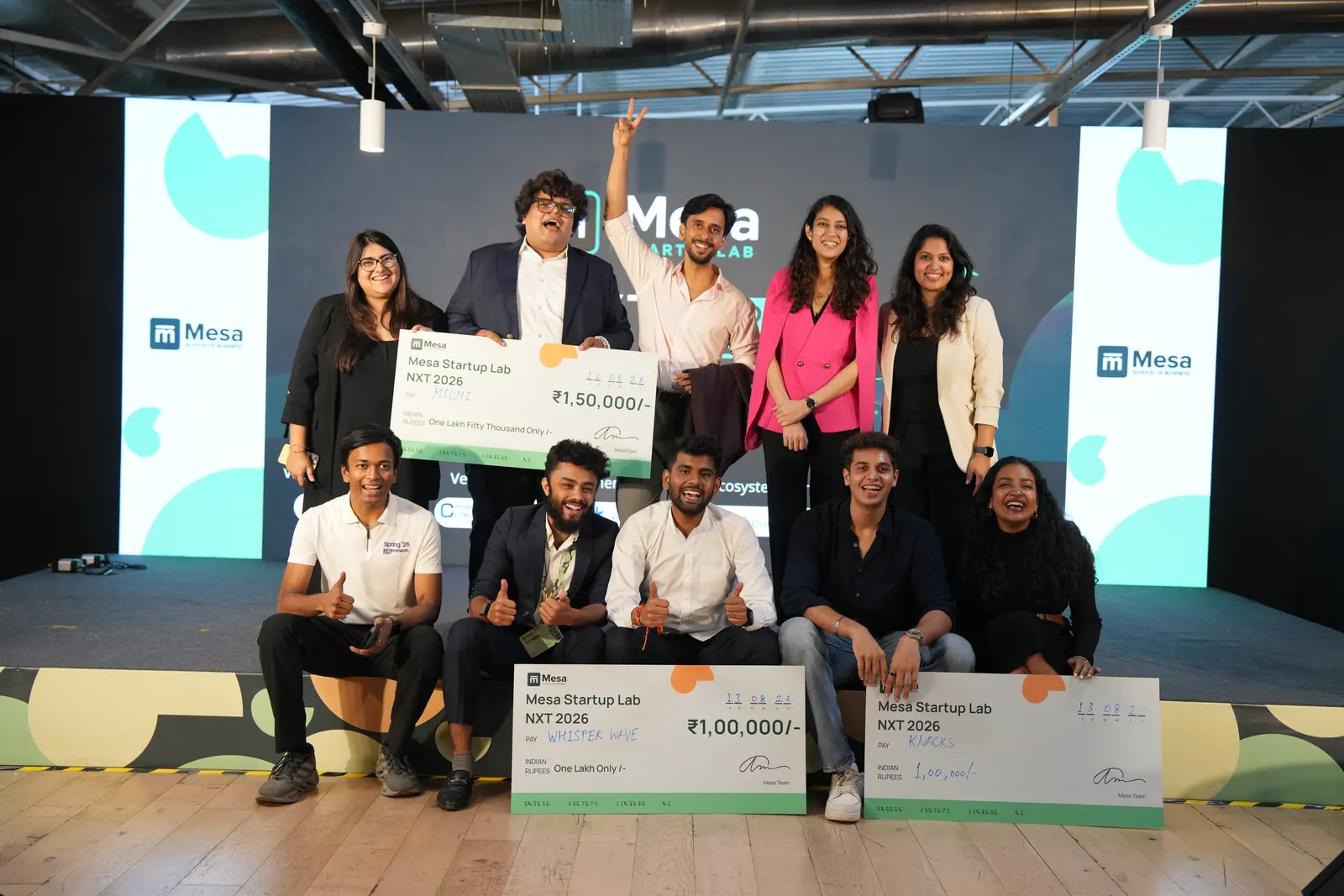
Demo Days are hosted by the Mesa Startup Lab. After the two-week sprint your team pitches its product, with a live demo and real users, to investors from across the country. The cohort's build wall goes up the same day.
You're 21 to 24. You could have taken the campus placement. You didn't, or you're planning to leave it. You follow YC, you know what an MVP is, and you haven't built anything that anyone outside your friends has used.
Less than two years into your first job. It isn't teaching you what you want to learn. You'll take leave, or quit, for 45 days.
You've just joined the family business and want to bring AI into it. Use its real workflows as your hackathon briefs and go back with the automations and tools already built.
| Online course / YouTube | 6-12 month bootcamp | Arena 45 | |
|---|---|---|---|
| Format | Recorded videos, self-paced | Mostly online, months long | 45 days, full-time, on campus in Bangalore |
| Time to first shipped thing | Often never | Weeks | Day 1 |
| What you leave with | A certificate | A certificate, sometimes a placement drive | 8 deployed builds on GitHub and a product pitched to 25+ VCs |
| Peer group | None | A Discord server | 100 builders in one room, selected by assignment and interview |
| Mentors | None | TAs | 1 mentor per 10, 1:1 through the sprint |
| Stage at the end | No | Placement drive | Demo Day with 25+ VCs |
| Completion rate | Typically under 15% | Varies | High. You're on campus with a pod and a mentor every day |
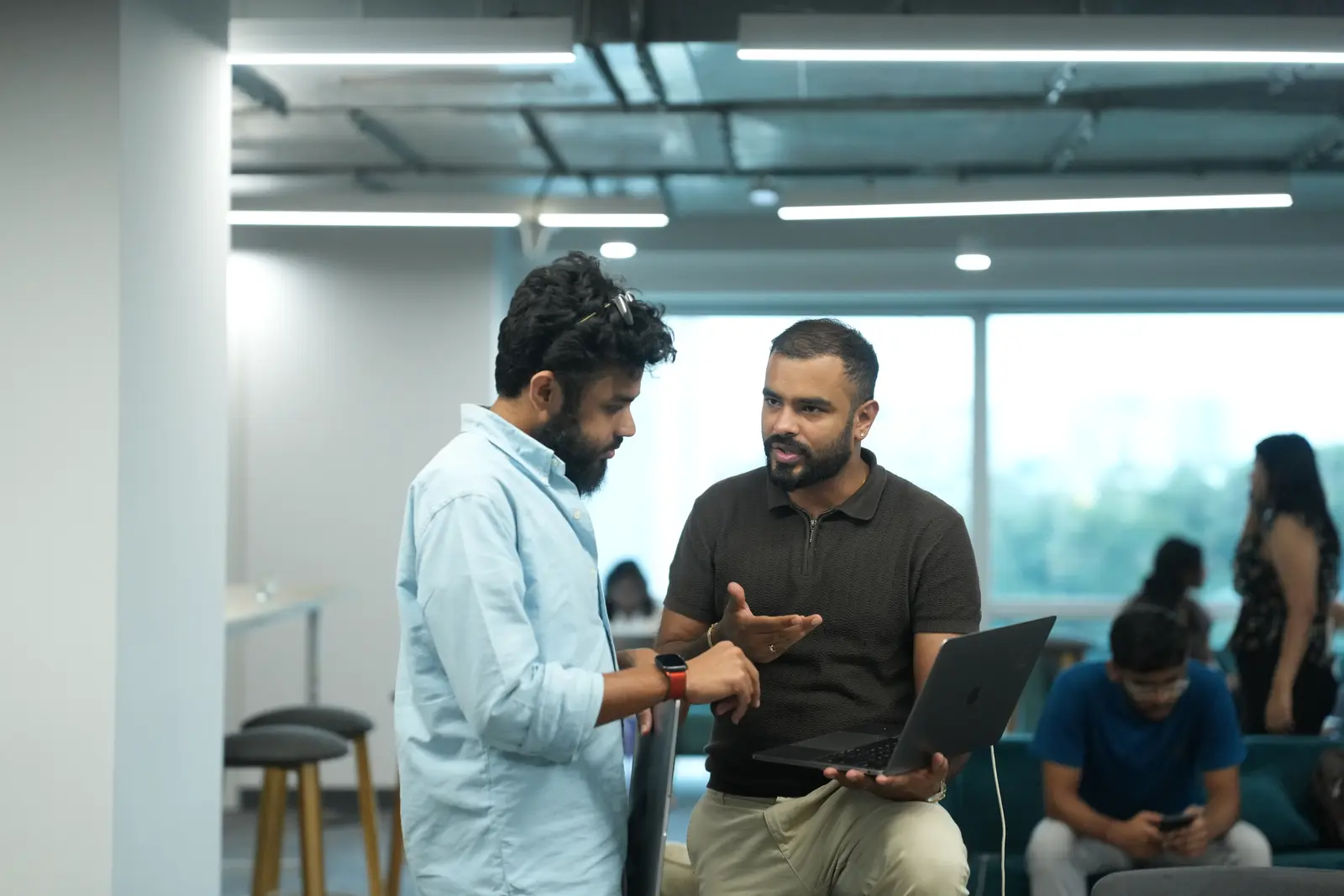
Every session is taught by someone who uses these tools at work every week. Each pod of 10 gets a mentor who has built with AI, and you work with them 1:1 during the sprint. Founders from Mesa's network visit through the 45 days.
[Two lines on what they've built and what they'll teach you.]
[Two lines on what they've built and what they'll teach you.]
[Two lines on what they've built and what they'll teach you.]
[Two lines on what they've built and what they'll teach you.]
[Two lines on what they've built and what they'll teach you.]
[Two lines on what they've built and what they'll teach you.]
[Two lines on what they've built and what they'll teach you.]
[Two lines on what they've built and what they'll teach you.]
Mesa runs full-time postgraduate and undergraduate programs from its campus in Bangalore. Arena 45 is the shortest program we offer. It uses the same campus, faculty, mentors and founder network.
How the days run, who the mentors are, what happens after day 45, fees and housing. The parent FAQ covers all of it.
The quality of the cohort matters a lot to us. 100 seats. There is a builder assignment and an interview, and we turn away more people than we take.
| Round | Deadline | Program fee |
|---|---|---|
| Early bird | [7 October 2026] | ₹ 3,50,000 + GST |
| Round 1 | [5 November 2026] | ₹ 3,50,000 + GST |
| Round 2 | [1 December 2026] | ₹ 3,50,000 + GST |
| Round 3 (final) | [22 December 2026] | ₹ 3,50,000 + GST |
GST at 18% applies. Fee is paid upfront before pre-work begins and includes all campus days, hackathons and Demo Day. Housing and travel are not included. [Round pricing ladder and dates to be confirmed.] Seats are typically 80% full by the end of Round 2.
No. Pre-work covers how software works and gets your stack set up. Week 1 starts from how AI works under the hood. You build with Claude Code from day 1; you understand by building.
A web app, an automation, a research agent, a complete agent product, a full-stack app with login and a database, a micro-SaaS that takes payment, a consumer app launched on Product Hunt, and your own product. All public, all deployed.
No. There is no placement assistance. You leave with 8 deployed projects and a product you pitched to VCs, and your GitHub does the talking in any interview.
You get a Mesa certificate of completion. It matters much less than the 8 projects on your GitHub.
It's 45 days instead of 6 to 12 months, fully on campus instead of online, and you leave with deployed products instead of a certificate. And you pitch to VCs at the end.
Forge and the PGP are 12-month full-time programs with placements. Arena 45 is a 45-day builder residency with none. If you have 2+ years of work experience, PGPx Ascend is the 8-month part-time version of the same curriculum.
No. 12 hours a day, 6 days a week, in Bangalore.
Your product is yours. Apply to the Mesa Startup Lab, launch it, use it to get hired, or take it into your family business. You keep lifetime access to the refreshed curriculum and the alumni build wall.
Admissions are selective. The assignment is about effort and follow-through, so you can reapply for the next cohort with a stronger one.
No. You learn to build products using AI. Training models is a different course.
Mesa School of Business, Bangalore, runs PGP, UG, Forge and Ascend programs, with 100+ founders on campus and 500+ partner startups. Campus at WeWork, Bannerghatta Road.
About ₹9,200 a day for 12 hours of supervised building with a 1:10 mentor ratio, on campus, ending in a product pitched to investors. Compared with 8 months of Ascend at ~₹12L, it is Mesa's most accessible builder program.
[Housing option to be finalised: a 45-day residential bundle via Mesa's PGP residential partners.]
Full-time campus program with daily attendance, one mentor per pod of 10, and Mesa staff on site.
Nobody can promise that, so we don't. What we promise is 8 deployed projects, a launched product and a pitch to 25+ VCs. That is what employers look at now.
[Refund and deferral policy to be finalised.] The mandatory pre-work filters for commitment before day 1.
[Loan partner to be confirmed.] The fee is paid upfront. There are no scholarships.
100 seats. Cohort 1 starts 1 January 2027 in Bangalore. The full curriculum is above, day by day. If it feels right, apply.