

A system built around shipping your startup. Everything in Mesa Startup Lab is designed to move your company forward capital, sprints, reviews, and mentors that keep you building on a real startup cadence.
Work with the MSL leadership team to identify high-impact problems and cut through noise. These founder-led discussions on markets, wedges, and trade-offs leave you with clear focus and a concrete next step.
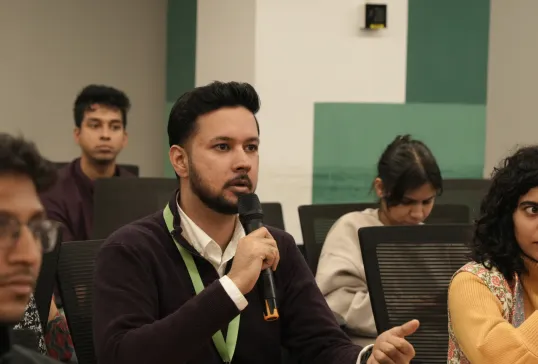
Tap into AI/tech, growth, marketing, and ops specialists who help you design experiments, build funnels, and ship faster. From AI agents to activation and performance campaigns, experienced operators work by your side.
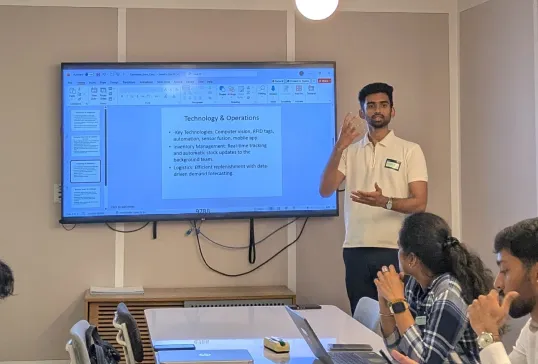
Beyond core faculty, you get a rotating bench of founders and senior operators matched to each stage. From validation to pricing, sales, and hiring, experts step in as challenges arise—so mentoring tracks your milestones, not generic advice.
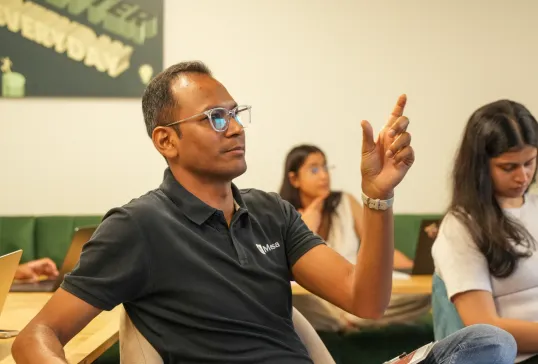
Different roles require different proof. Mesa prepares you for the exact formats founders use to hire cases, take-homes, audits, role-plays, and founder-style interviews so every rep compounds toward your target role.
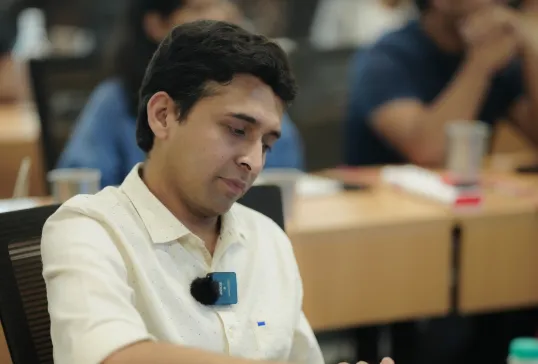
Build with your co-founders from a dedicated on-campus workspace, with protected program hours for deep work. You get focused build time, meeting rooms, and an environment where everyone is shipping.
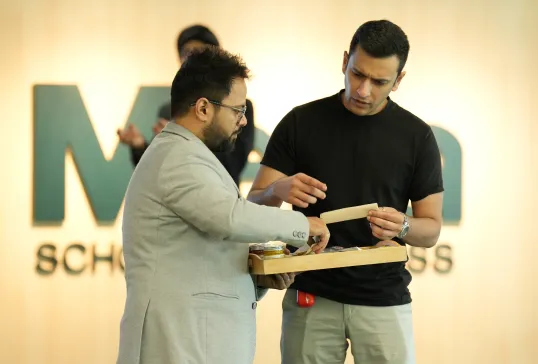
Each week, founders share wins, roadblocks, and learnings in “Victory Fridays.” You put numbers on the board and get honest peer feedback—building momentum, accountability, and a strong founder community.
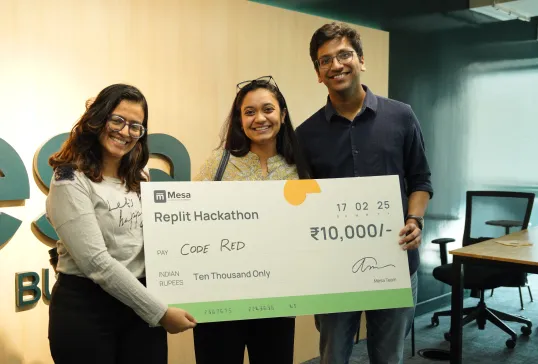
As your startup matures, MSL helps turn proof into funding readiness. You get investor intros, support refining your story and data room, clarity on when and how to raise, and access to Mesa’s in-house fund.
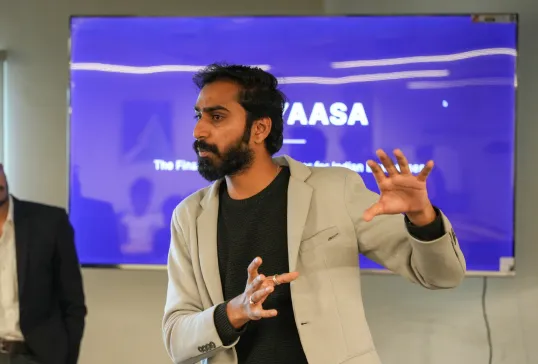
Leverage Mesa’s startup credits, partnerships, and corporate connects. From cloud and AI tools to pilot opportunities with 500+ partners, you get a faster, cheaper path to test, distribute, and validate your product.
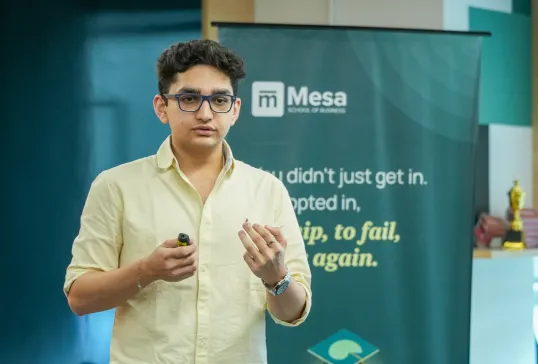


Financial runway to focus on building full-time.
Dedicated workspace for the founder and two team members, worth ₹50,000+ monthly.
Classes, sessions, workshops, and learning resources remain open to fellows.
Regular check-ins on product, strategy, and execution.
Hands-on support for campaign setup, distribution, and content strategy from Mesa’s growth team.
Practical help to build, automate, and ship your product faster.














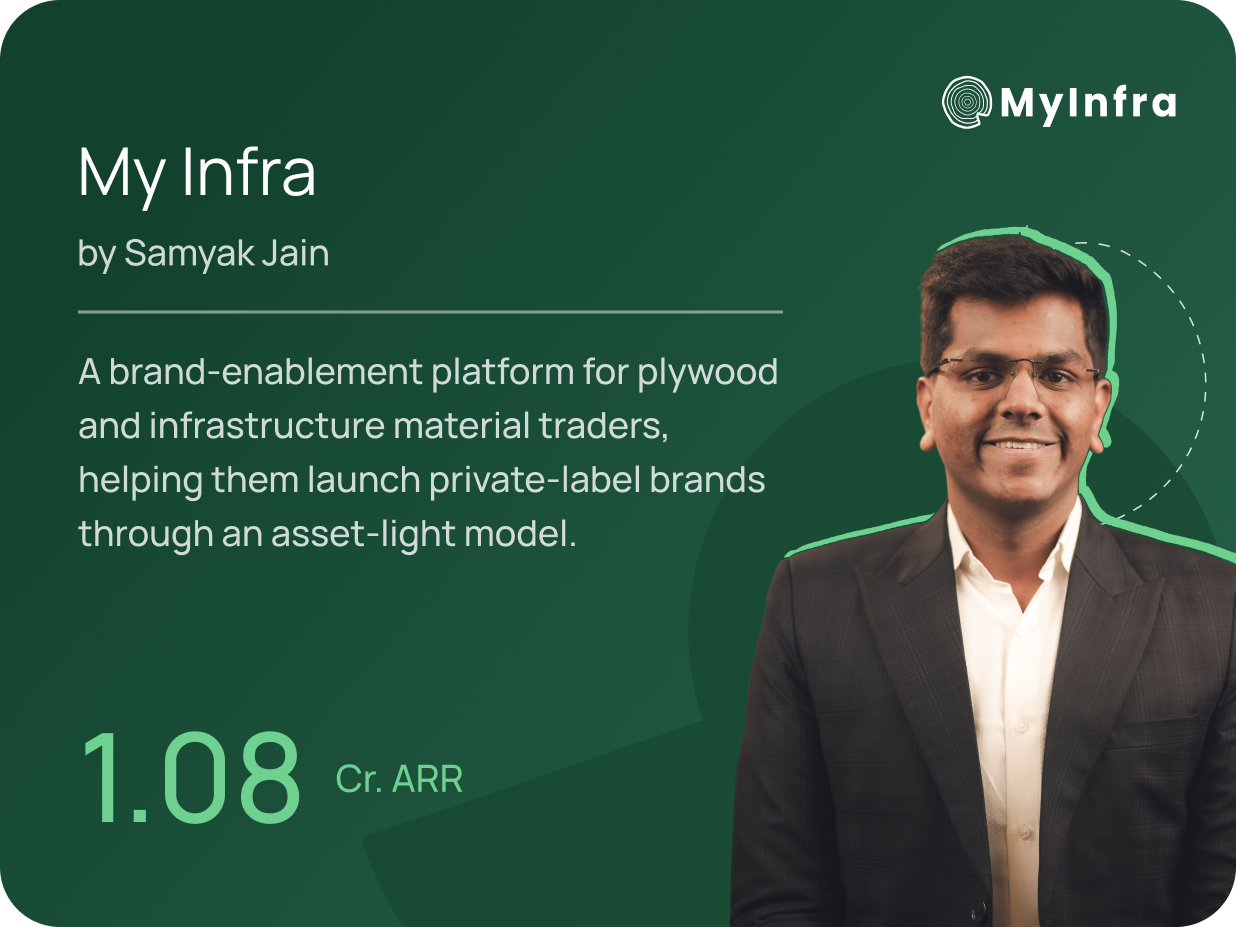
By Samyak Jain,, Cohort 2

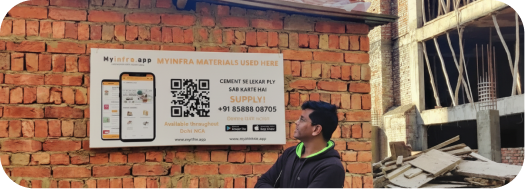
MYINFRA is a B2B infrastructure materials startup built to fix what's fundamentally broken in building–materials distribution: thin dealer margins, capital locked in inventory, and inconsistent supply quality.
MYINFRA supplies engineered cement products in smaller quantities, faster cycles, and with price-stable quality. Its flagship brand, MYINFRAPLY, focuses on standardisation, branding, and fulfillment speed – helping local dealers compete with national players without choking working capital.
MYINFRA took shape during ideation and early scale. Samyak used the Mesa ecosystem to refine the core thesis by going deep into dealer behaviour and supply-chain economics, then stress-testing the model with small real feedback. That iteration helped in sharpening the dark-warehouse approach, streamline procurement from underutilised manufacturers, and build a repeat-able dealer onboarding playbook.

Building MYINFRA taught me that distribution is not about moving products. It is about moving trust. Dealers do not just need better economics, reliable supply, and someone who understands the reality on the ground.
This is my second startup, and Mesa changed how I think and operate. It helped me slow down when needed, get brutally clear on what matters, and then execute with speed. Every founder and operator conversation forced sharper decisions; not prettier slides.
The biggest lesson I'm taking forward is simple: execution compounds faster than ideas. If you solve a real problem deeply and consistently, scale becomes the by-product.
- Samyak Jain, Cohort 2
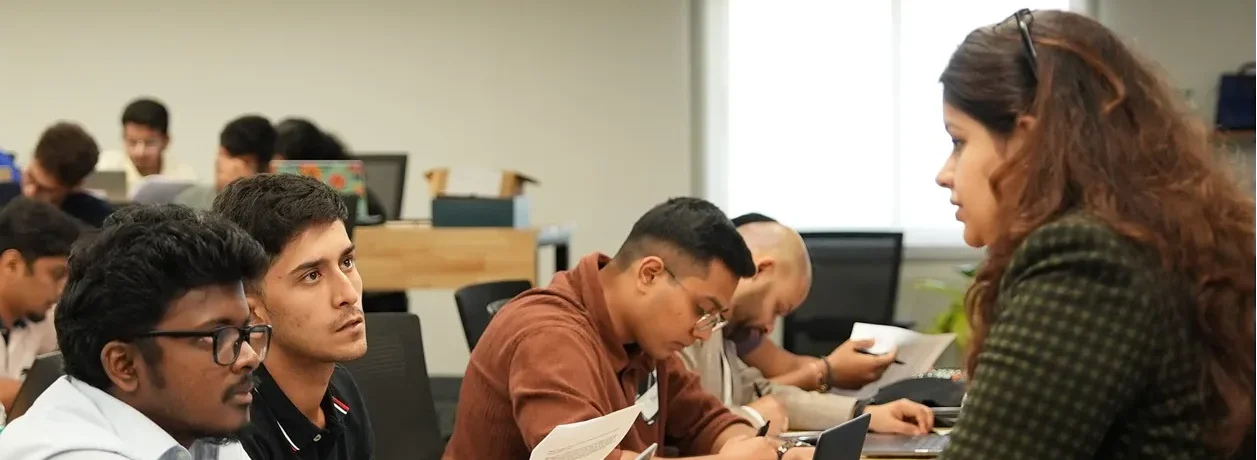
By Arjun M S & Balagopal Jayakumar,

VetQure AI is a clinical operating system for modern pet clinics. It turns doctor conversations into structured SOAP notes, generates visual disease summaries, and helps clinics stay connected with pet parents on WhatsApp. The goal is simple: reduce admin time, improve care quality, and help clinics grow revenue.
It started as an early prototype inside Mesa Startup Lab and scaled by doing the opposite of what most people do. They sold before it was perfect, onboarded their first 15 clinics with a Figma flow, then shipped a working voice-to-SOAP EMR in three weeks. Every iteration came straight from clinic feedback, and the positioning stayed tight: not “another software,” but the backbone of modern pet care.
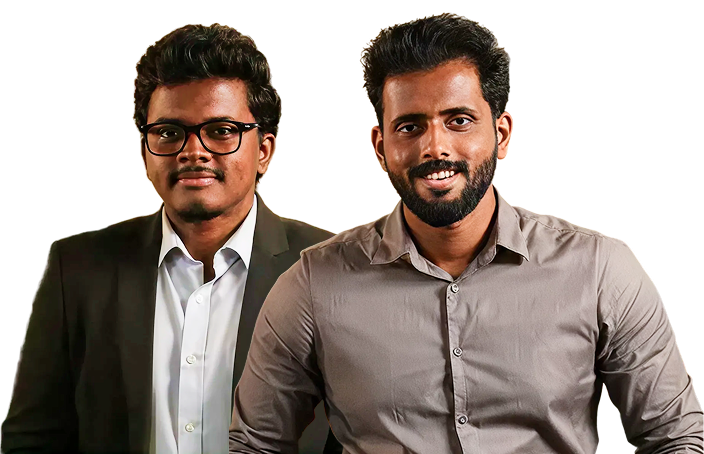
“Before Mesa, I thought building meant coding. Mesa flipped that for me. Building a real company starts with talking to customers, charging early, and creating momentum before you feel ready.
We sold VetQure when it was still duct tape and vision. Then we kept shipping. Feature by feature, only based on what clinics asked for. Mesa also pushed us to tell a bigger story, not just what the product does, but what it enables for veterinary care in India.
Today, VetQure powers 80+ clinics and growing. But it started as an idea in a pitch room. Mesa turned that idea into movement.
- Arjun M S & Balagopal Jayakumar

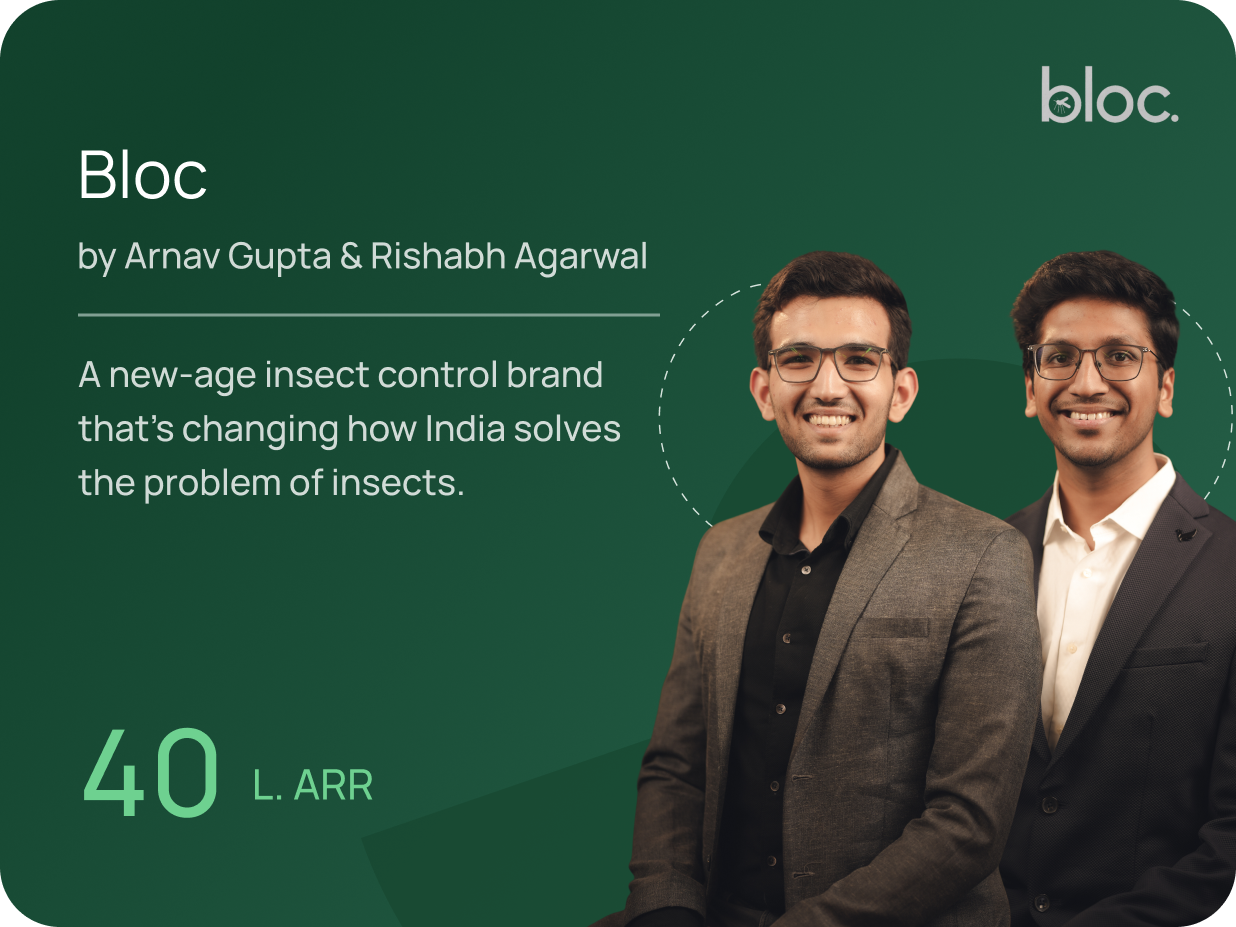
By Arnav Gupta & Rishabh Agarwal, Cohort 2

Bloc is a new-age insect and pest control brand built for premium homes and commercial spaces. It replaces coils, vaporizers, sprays, zappers, and fogging with a single chemical-free solution that delivers continuous protection. No consumables. No odour. No health risks. Minimal maintenance.
Incubated at Mesa Startup Lab, Bloc was built by questioning everything that already existed in pest control. Instead of short-term repellents or service-heavy models, the team focused on professional-grade performance combined with thoughtful design. The result is a product customers can rely on daily, not just during peak seasons.
From early pilots to hotel deployments, Bloc validated demand on the ground. The team is now manufacturing its own products in India, tightening supply control and laying the foundation for a full suite of smart, chemical-free pest management solutions across households and commercial environments.
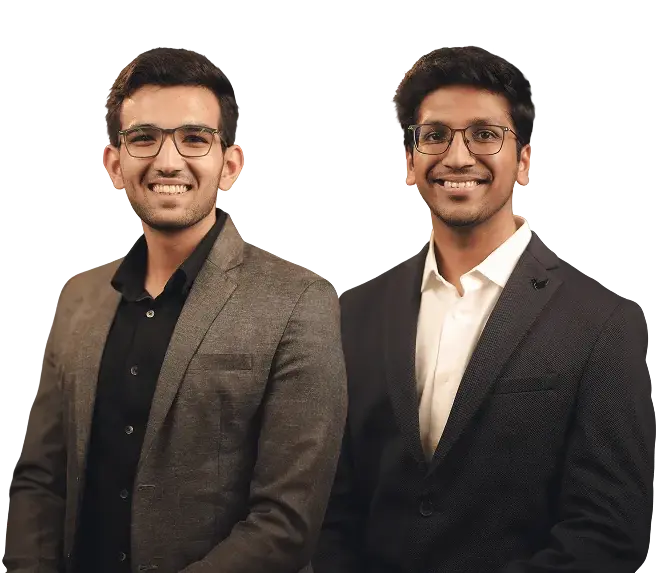
Building Bloc as first-time founders was messy and uncertain. Mesa helped us bring clarity to that chaos. Early on, Ankit Agarwal pushed us to stop building for everyone and focus on one clear audience. That shift changed everything. We designed for a specific use case, validated demand through real revenue, and learned to think deeply about pricing and go-to-market from our classes and startup leader sessions.
Mesa connected us with the right mentors at the right moments, whether it was performance marketing, founder-to-founder problem solving, or tough brainstorming calls. Weekly check-ins with our MSL mentor, Siddharth Chauhan, kept us accountable and helped us navigate zero-to-one decisions. Conversations with Varun Limaye reinforced one lesson again and again: keep selling, and always work backwards from where you want to be in 1 and 5 years.
More than frameworks, Mesa gave us belief. The campus environment, constant feedback, and support made us trust ourselves. And when you’re building a startup, that belief is everything. It’s what makes quitting not an option.”
- Arnav Gupta & Rishabh Agarwal, Cohort 2

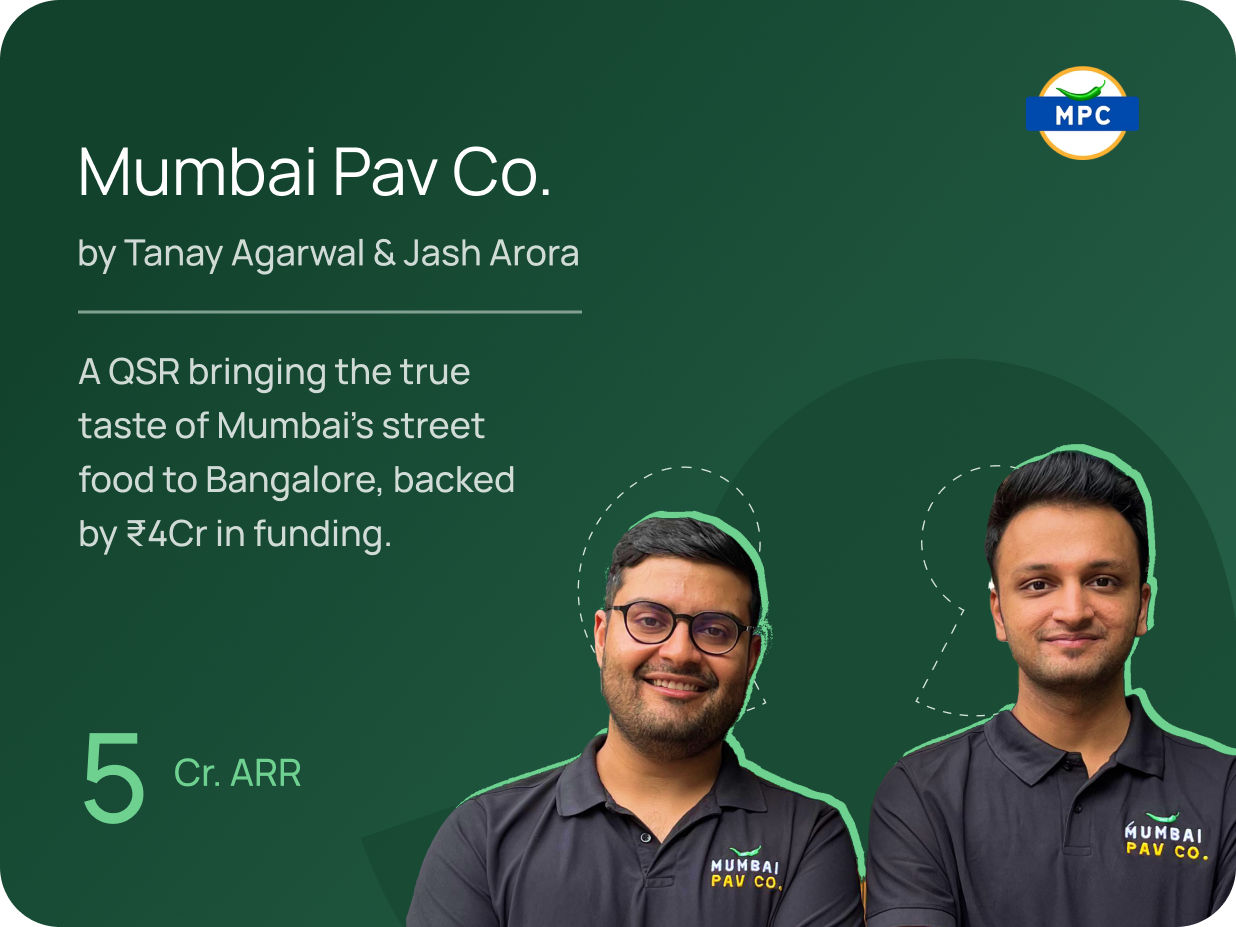
By Tanay Agarwal & Jash Arora, Cohort 1
Mumbai Pav Company is a quick service restaurant QSR that delivers authentic Mumbai-style street food in Bangalore.
MPC was founded by Jash Arora & Tanay Agarwal, two students from the founding cohort at Mesa. They formulated, clarified & tested their business as part of Mesa Startup Lab, and have seen tremendous growth in the last 1.5 years:
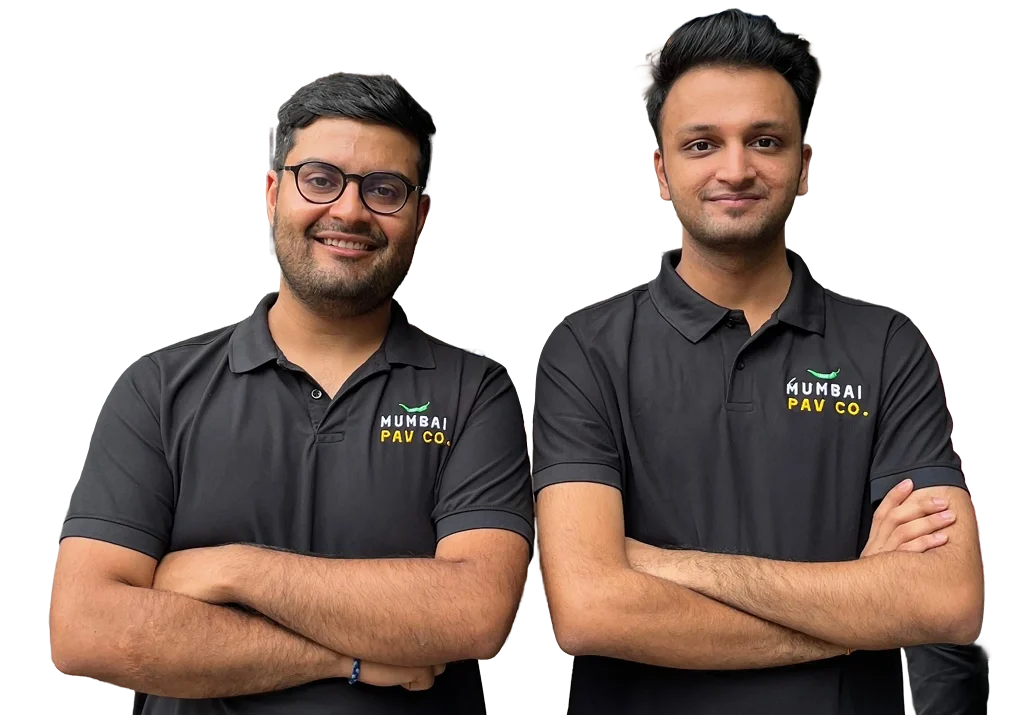
One of the biggest lessons I took away from Mesa was the importance of doing one thing really well. Focus over diversification is something we kept hearing in class, and it shaped how we built Mumbai Pav Co. We learnt to double down on what was working instead of chasing every new idea. For instance, we worked on how to design marketing campaigns and even built a loyalty campaign that directly informed how we think about retention today. When we started raising, the Mesa network made a very real difference. Almost 50 percent of our cap table is made up of angels we met through Mesa, including people like Mohit Gulati, Anand Sinha, Varun Limaye and more.
Many of them first came in as mentors and CXOs who taught in class. As we grew, we took up our own office and scaled the team, and at every step Ankit Agarwal was deeply involved in getting us funding ready. We were connected to lawyers, helped in understanding term sheets, and got to apply everything we learnt in the VC classes to our specific round. From deciding round size to building FOMO and closing the offer on the right terms, Mesa was there through it all
- Tanay Agarwal & Jash Arora, Cohort 1

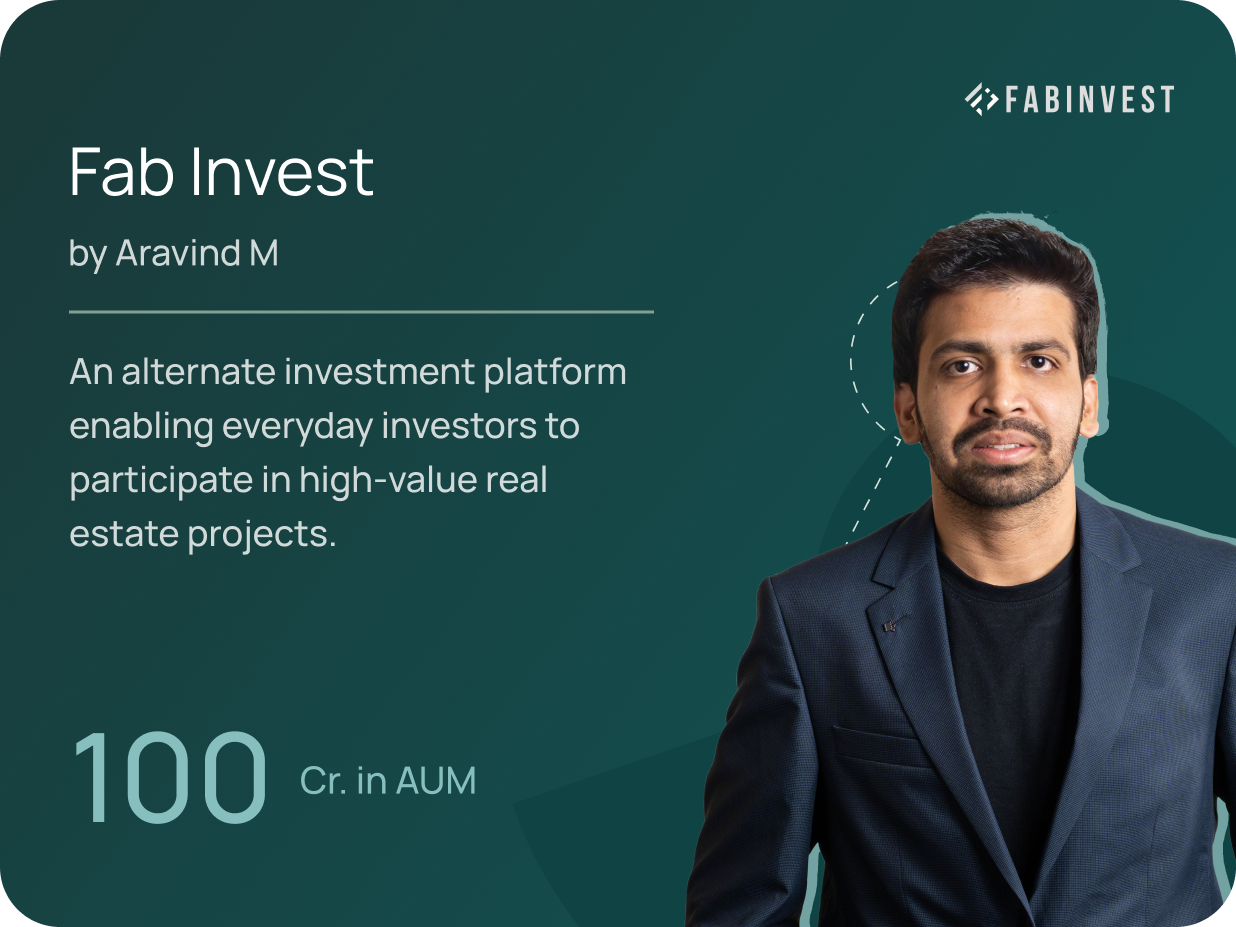
By Aravind M, Cohort 1

Fab Invest is a Real Estate Investment platform that facilitates small and mid-scale investors to micro-invest in premier real estate projects, earning up to 18% Returns per annum from these Investments.Founded by Aravind M and incubated during his time at Mesa, Fab Invest has now managed assets upwards of 110 Cr.
Through his time at Mesa, Aravind networked heavily, pitching his idea and getting feedback from VCs and startup leaders that came to campus. He also raised capital as part of Mesa Startup Labs at a crucial time during their expansion, and streamlined processes with the help of Ankit – Co-founder at Mesa.
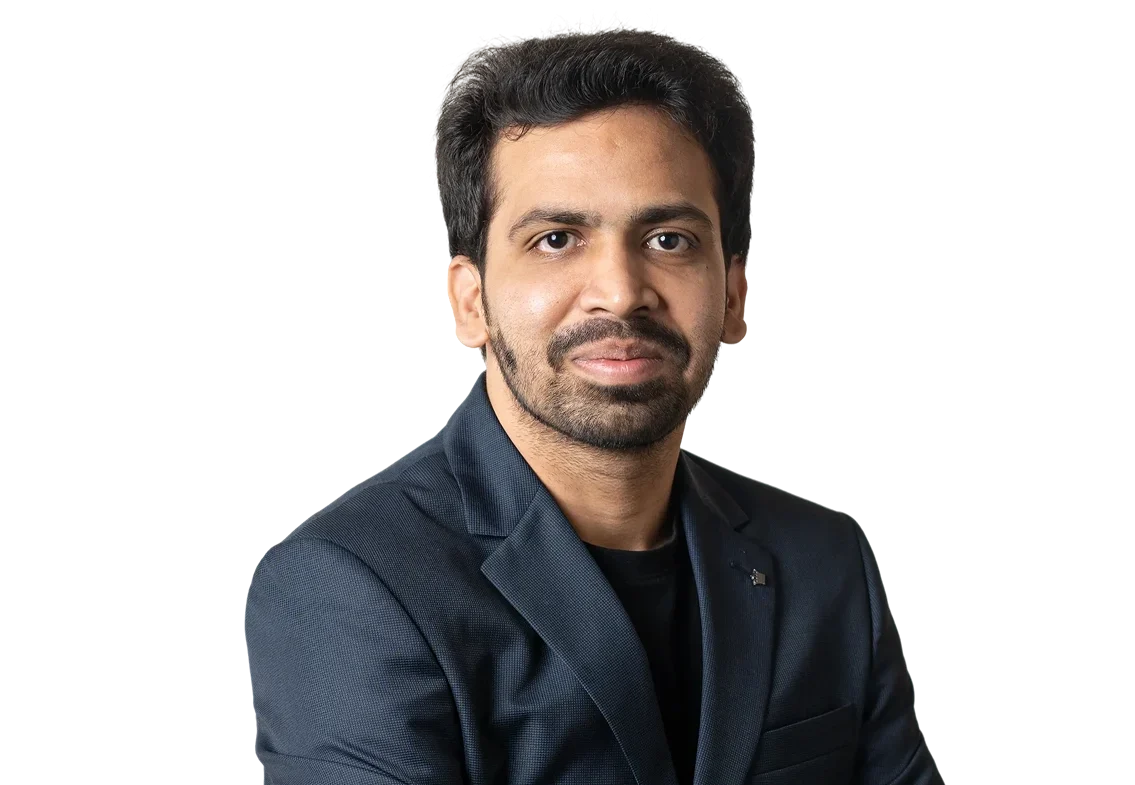
Entrepreneurship is not an easy journey at all - barely 1% of startups make it. A lot of founders go through a rough time in the initial 2 years, and this can be testing. If I were to leave a thought with future Mesa students at the start of their journey, it would be to start something they are truly passionate about, that they really want to build.
Ideas and execution can also be poles apart. In the end, it is only 10% what the idea is, and 90% how you execute it.
- Aravind M, Cohort 2
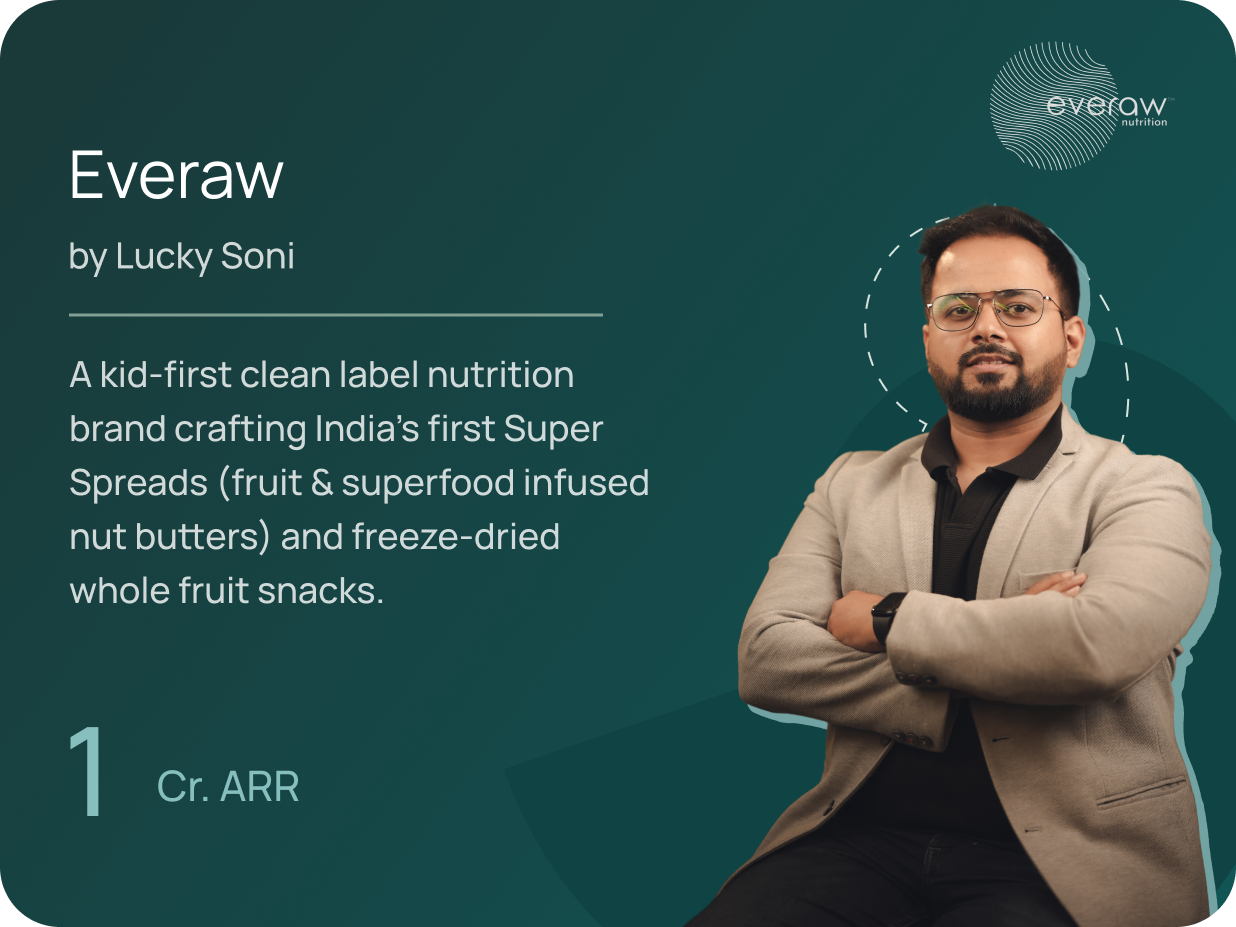
By Lucky Soni, Cohort 2
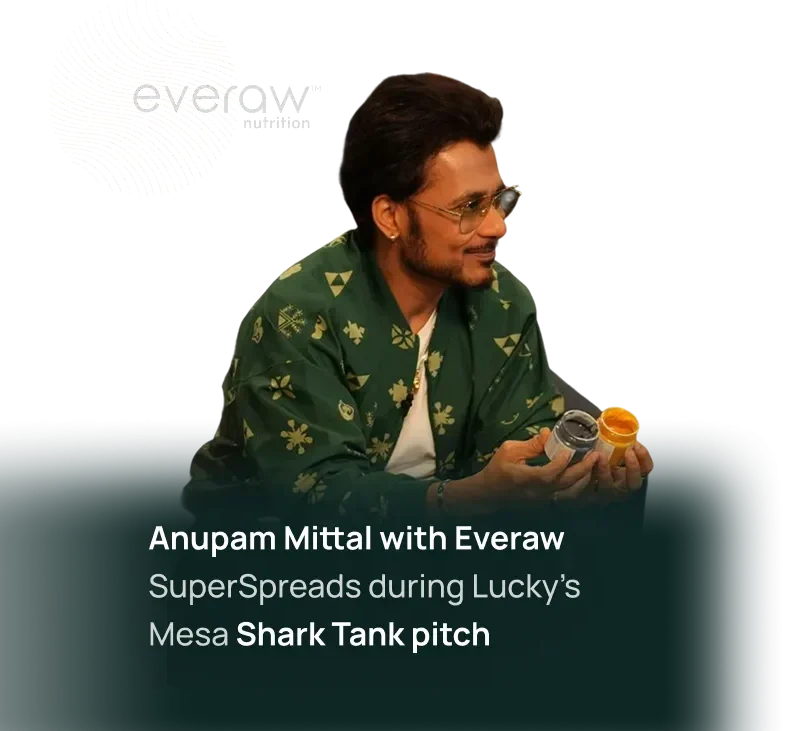
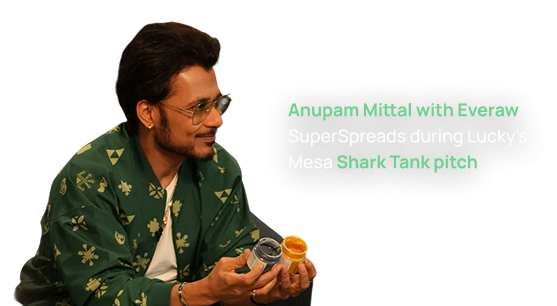
Everaw’s signature range is Super Spreads, which contributes about 78 percent of revenue, and it was piloted, launched, and scaled during Mesa’s business building sprint, BYOB.
Lucky entered Mesa at the ideation and family-and-friends sampling stage. The first public feedback came at Mesa’s pitch showdown, which he won through public voting. That win triggered structured testing.
Within days of the BYOB briefing on 2 July 2024, Lucky and Yash defined a new child-focused spread concept and began rapid prototyping on campus. Over 10 weeks they reached roughly 500 customers and generated about ₹2.5 lakh in rezvenue, using the sprint to test pricing, flavours, and packaging without brand pressure.

I used Mesa’s ecosystem selectively and deeply. The mock pitches and investor forums asked the tough questions and forced precision. Marketing Basics across two terms nailed the difference between a need and a want. The VC class with Mohit Gulati gave me that outside-in investor view and term-sheet literacy, GTM with Prof. Ray Titus shaped how we think about cross-sell, upsell, and packaging.
Through BSL, working with Epigamia showed me, ground-level, how scaled product development, labs, and teams actually run. On the business side, we closed about ₹6 lakh in October without burning hard. Our AOV is above ₹1,000 and the near-term target is to cross 1,000 orders a month. Soon, we plan to raise our first checks and make Everaw a pantry staple for our target households!
- Lucky Soni, Cohort 2