Last verified:
Few Indian cities give a business student as many chances to meet founders, hear how companies raise money and watch new products reach customers as Bengaluru does.
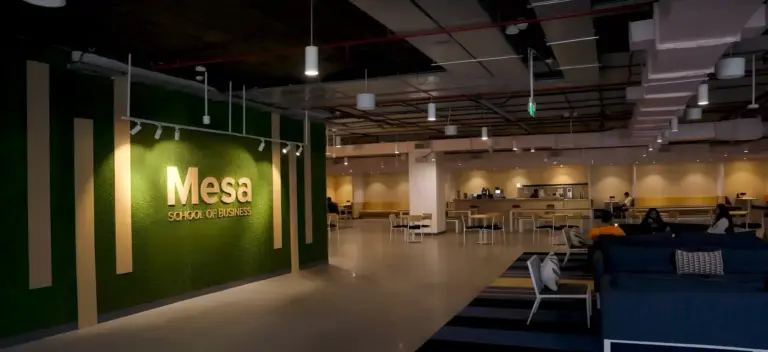
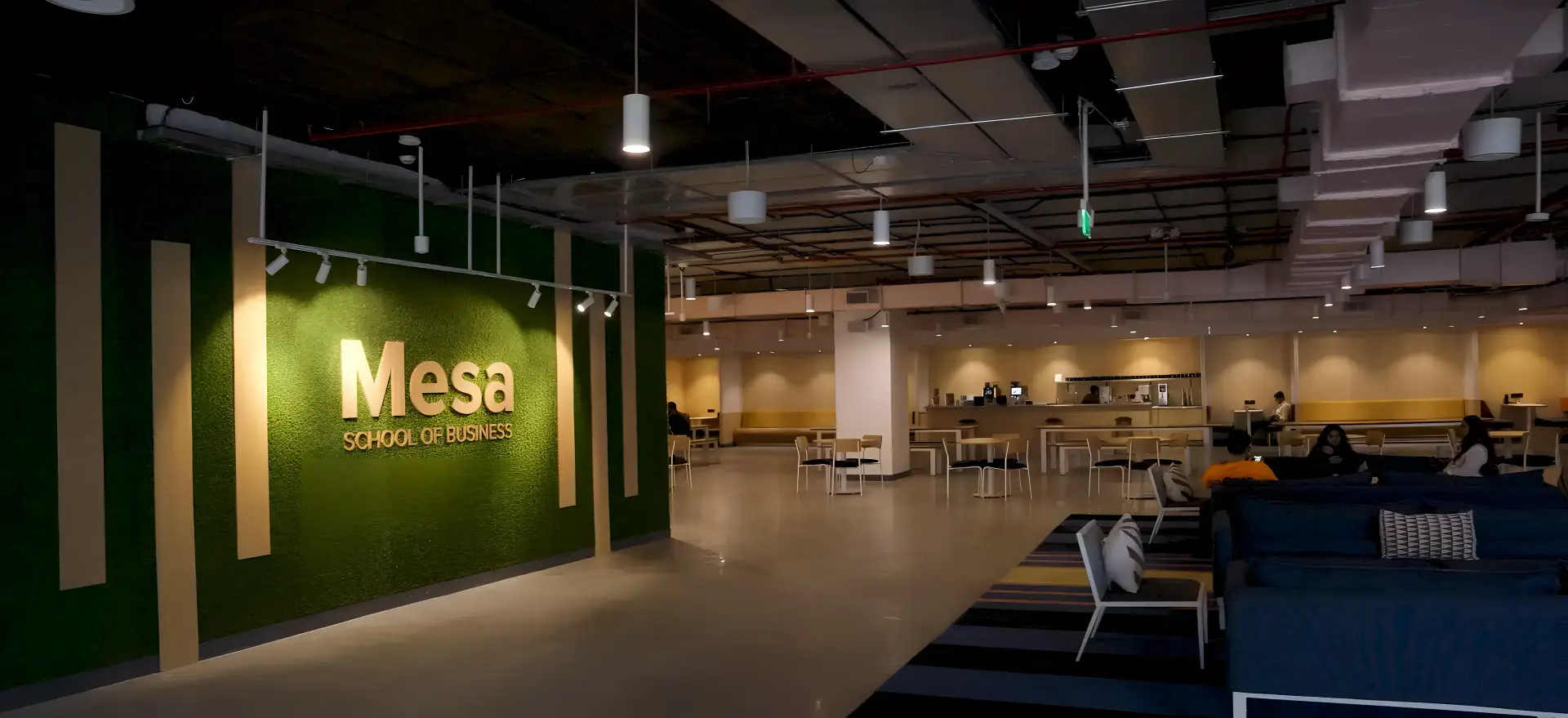
Mesa School of Business is a startup-focused business school in Bengaluru, and our PGP in Startup Leadership & Entrepreneurship is based at our campus on Bannerghatta Road in south Bengaluru. This guide looks at what the city’s startup community offers and how any business student can make good use of it alongside a program.
A startup culture built on founders and funding
Bengaluru’s startup culture is built on access: founders, investors and people who want to join startups meet regularly and openly at events across the city. Independent rankings show the scale behind it. The Global Startup Ecosystem Report 2026 by Startup Genome, reported by YourStory, ranks Bengaluru 15th among the world’s startup ecosystems and second in Asia for AI innovation. It puts the ecosystem’s value at $152.8 billion and the venture funding it attracted between 2021 and 2025 at $39 billion.
Recent rounds show that momentum. Technology companies in Karnataka raised $4.6 billion in the first nine months of 2026, up 26% on a year earlier, with most of it going to Bengaluru-based companies, according to Tracxn data reported by ThePrint. Among the largest, payments app CRED raised a $540 million Series H and ride-hailing app Rapido a $240 million Series F, while three Bengaluru startups, Emergent, Sarvam and KreditBee, became unicorns over the same period. The ASK Private Wealth Hurun India Unicorn and Future Unicorn Report 2025 counted 26 unicorns in Bengaluru, the most of any Indian city.
Finding opportunities worth your time
Events make that culture reachable for a student. One live listing of Bengaluru meetups drawn from Luma, Hidden Events, showed around 40 meetups in a single week in November 2026, most of them on AI, startups or networking.
Larger events return every year. The Bengaluru Tech Summit, whose organisers include Startup Karnataka and the Karnataka Digital Economy Mission, brings together an exhibition, a startup expo, a startup conference and investor connect sessions. YourStory’s annual TechSparks summit is another Bengaluru fixture. Between these, the calendar fills with founder meetups, demo days, pitch nights, hackathons, product-management meetups and small founder dinners.
The founders in these rooms vary widely: first-time founders testing an idea, people who have built consumer, fintech or mobility companies, and teams working on AI products, alongside the investors who back them. Each offers a different lesson, from finding the first customers to raising a large round, and for a student it can mean hearing in person from someone whose company they have only read about.
Taking part usefully
Before committing to an event, check whether students can attend, what it costs, which sessions your registration covers and how long the journey will take. Our campus is in the south of the city, and venues on the other side of Bengaluru can take well over an hour each way.
The planning template below is a hypothetical example, not a record of any student’s experience.
| Step | What to do | Example |
|---|---|---|
| Choose | Pick one or two sessions linked to your target role | A product-management talk at a city startup conference |
| Prepare | Read about the speakers’ companies and write one specific question | A question about how a founder chose between two products |
| Take part | Ask the question, note the answer and the people you met | Three short conversations, with names and topics noted |
| Follow up | Within a week, send something useful, not a request | A one-page note responding to a problem someone described |
Peers make this easier. Splitting events between classmates, then sharing notes, lets a group cover more of the city than one person can.
What Bengaluru offers a Mesa student
The city supplies access: events, companies and founders within reach of the campus. The program supplies structure, from classes to live company problems through the Business Strategy Lab, where briefs usually come from founders or visiting faculty and shortlisted teams present their work to founders for feedback.
For a student who wants to work in startups, few places put so many of the people they hope to learn from within a short journey. A useful habit is to review each month which events and conversations moved you closer to a target role, and to drop the ones that did not. Over a year, that habit turns a busy calendar into relationships and work that count.