Content reviewed:
Our Undergraduate Program in Business Management & Entrepreneurship at Mesa School of Business combines business foundations with cases, building projects and internships. You study how businesses make decisions, then apply that thinking to customers, products, channels, costs and teams.
Our curriculum includes 600+ hours of applied business learning, 150 hours of AI learning, 75+ case studies and exposure to 25+ AI tools. Business subjects such as marketing, finance and operations help students make decisions; tools such as ChatGPT, Codex or Airtable support research, prototyping and workflows. The subject is the decision, while the tool helps students test or execute it.
The four year learning journey
The map below follows the semester structure in our UG brochure. It shows the progression of the program, including later-year learning that our founding cohort has yet to reach. Review the detailed course schedule for your own intake.
| Stage | Business and technical learning | Applied work |
|---|---|---|
| Semester 1 | New Venture Development; Crafting Marketing Strategies; Thinking Like an Investor; Applied AI from idea to launch; Financial Reporting and Analysis; Microeconomics | D2C product, AI product and a curriculum Startup Lab sprint |
| Semester 2 | Entrepreneurial Strategy; MVP to Market and GTM; Product Management Foundations; Applied AI; Quantitative Methods; Entrepreneurial Finance; Macroeconomics | Founder’s Office Internship 1 and work on presenting ideas |
| Semester 3 | Market Creation; Digital Marketing; Venture Capital and Private Equity; Applied AI with machine learning; Entrepreneurial Selling; Operations Management | Gen AI Product Lab and Changemaker Fellowship |
| Semester 4 | Power of Brands; Growth Marketing; Behavioral Economics; AI Product Management; Mergers and Acquisitions; B2B SaaS Sales | Founder’s Office Internship 2 and outdoor leadership |
| Semester 5 | Omnichannel Customer Management; Platform Strategy; Advanced Negotiation; three electives | Creator Garage, with masterclasses including AI governance and negotiation |
| Semester 6 | Regulation and Startup Innovation; Building High-Performance Teams; Game Theory; three electives | Founder’s Office Internship 3, with pitching and fundraising masterclasses |
| Semesters 7 and 8 | A longer internship or venture pathway, supported by shared and function-specific workshops | Full-time startup work or building a venture; Mesa Startup Lab participation requires selection |
Elective examples in the published map include Venture Growth Lab, Ethical AI for Business Impact, Venture Capital Fundamentals and Applied Machine Learning in Semester 5, and Fintech, Strategic Fundraising, AI Product Management and Growth Strategies for Global Markets in Semester 6. Availability and selection should be checked in the current course schedule.
Working through a business decision
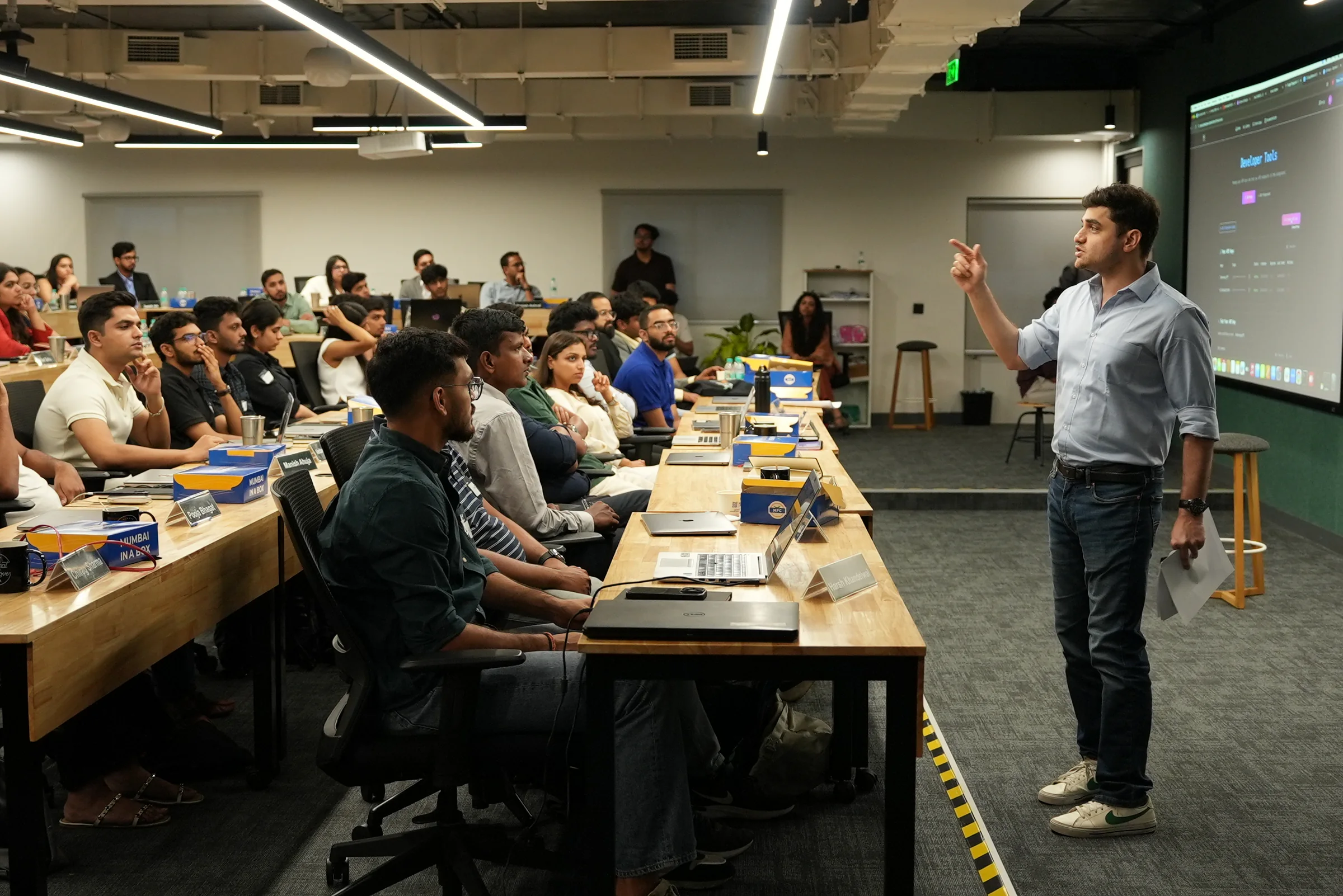
Our founder-led cases ask students to use information, choose a direction and explain their reasoning. The examples below are past assignments, illustrating how classroom learning connects with operating decisions; case topics can change across intakes.

Neeman’s and the choices behind growth
In a past case led by Amar Preet Singh, Co-founder and COO of Neeman’s, our students explored how a sustainable footwear brand could grow. They used product, customer and channel data to propose a five-year roadmap.
The assignment brings together brand positioning, channel strategy and the economics of expansion. Students consider how online and offline choices could affect the business and explain the trade-offs behind their recommendation.
d’you and expansion through quick commerce
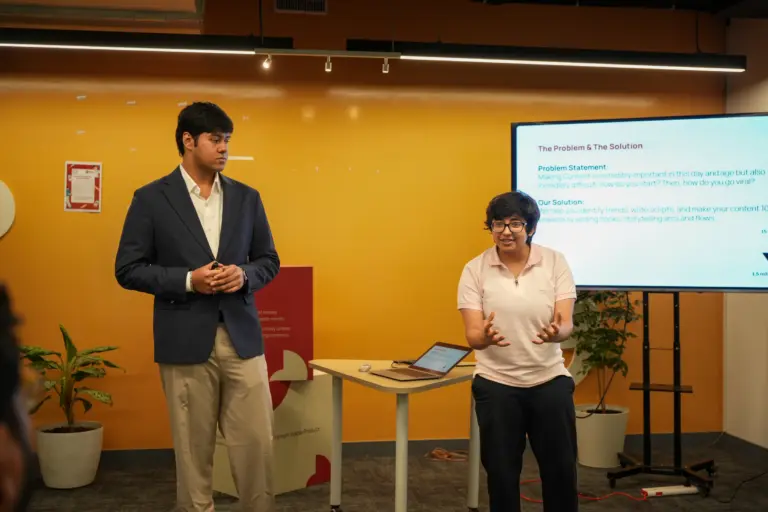
In a past case led by founder Shamika Haldipurkar, our students explored how d’you could expand a premium skincare portfolio through quick commerce. They considered product selection, launch execution and customer experience while preserving the brand’s positioning.
This connects marketing with product strategy. Choosing a channel also means deciding what to offer there, how to present it and how to make the customer experience consistent with the brand.
Other past case examples include Comet’s marketplace operations, Scapia’s traveller engagement, Cosmix Wellness’s awareness and organic growth, Emversity’s acquisition channels, and investment evaluation with Blume Ventures. These show the range of business questions students have worked through.
From an assignment to work you can explain
| Learning area | Assignment or experience | Work to discuss |
|---|---|---|
| Business strategy | Neeman’s case | A growth roadmap using product, channel and customer information |
| Product and marketing | d’you case | A portfolio and launch recommendation for quick commerce |
| Entrepreneurship | Build Your Own Business | The offer tested, customer response and business decisions made |
| AI and product | Product-building work | The user problem, product flow and demonstrable output |
| Startup experience | Founder’s Office internship | The responsibilities and work agreed for the particular role |
These examples explain the work, rather than a single grading formula. Ask us for the course-specific assessment and feedback arrangements, including individual and team requirements, when reviewing the curriculum.
How AI connects with business learning
We use AI and product tools to move from a business question to a working response. Representative software examples include ChatGPT, Claude, Codex, Lovable, Replit, Make, Zapier, Airtable, n8n, ElevenLabs and Descript. These are tools, not subject names; the mix can change with the task and intake.
A research tool can help organize information, a product builder can support a prototype, and an automation tool can connect steps in a workflow. Students still need to understand the user, choose the right input and decide whether the output is useful.
Our UG student Krrish Goel built a tariff-simulation prototype for exporters. His work gives prospective students a concrete example of how a business problem can become a product flow.
When you explore an AI project, ask what job it performs, what information it uses and what happens when an input is incomplete. Those questions distinguish a compelling demonstration from a reliable tool.
Building experiences through the program
Build Your Own Business introduces the work of developing and selling a D2C brand. Build Your Own Product focuses on an AI product, while Creator Garage adds a content channel. The final-year venture choice provides a longer period to work on a business.
Our founding cohort’s BYOB sprint ran for eight weeks. Later intakes should follow their own program schedule. The Semester 1 Startup Lab sprint is a curriculum activity; entry to the longer Mesa Startup Lab pathway has a separate application and selection process.
Internships and the final year
Our regular internships take place in Semesters 2, 4 and 6. Semester 8 offers a further full-time internship or time to build a venture. Students selected for Mesa Startup Lab may receive mentoring, operator guidance, investor-readiness support and workspace; investment is a separate decision.
MSL evaluates the founder and venture together, including the market, product, progress and potential. No single selection criterion is a prerequisite. Mentoring and introductions support venture development; an investment decision is separate.
Frequently asked questions
Can students from different school streams apply?
For our August 2027 intake, students from any stream who completed Class 12 in 2026 or will complete it in 2027 may apply. One gap year is allowed. If you have a question about your current coding level, discuss it with Admissions alongside the course requirements.
Is this an engineering degree?
No. Our UG program focuses on business management and entrepreneurship, includes applied AI and product learning, and awards our certificate of completion rather than an engineering degree.
Does every student use every named tool?
The named tools are examples from our curriculum. The appropriate tool depends on the work, and the list can evolve. We encourage applicants to look at the skills and outputs as well as the software names.
How can I understand assessment before joining?
Use our UG program page to join an information session, and ask Admissions for the current course outline, assignment expectations and assessment arrangements. This learning map shows the sequence; detailed grading, feedback and completion requirements belong in the academic information for your intake.