Content reviewed:
You can learn entrepreneurship through more than one route after Class 12. A university degree with practical projects, a specialized business-building program, work in a family business, or a small venture alongside study can each help you develop different parts of the job.
At Mesa School of Business, we encourage you to begin with the work you want to learn. Understanding customers, making an offer, selling, handling costs and working with other people are useful whether you become a founder immediately or first gain experience inside a company.
This guide helps you compare the routes and explains where our four-year Undergraduate Program in Business Management & Entrepreneurship fits.
What learning entrepreneurship involves
A business idea becomes more useful when you can identify a customer and a problem that matters to them. From there, you need a way to test the offer, learn what people will pay for and understand the cost of delivering it.
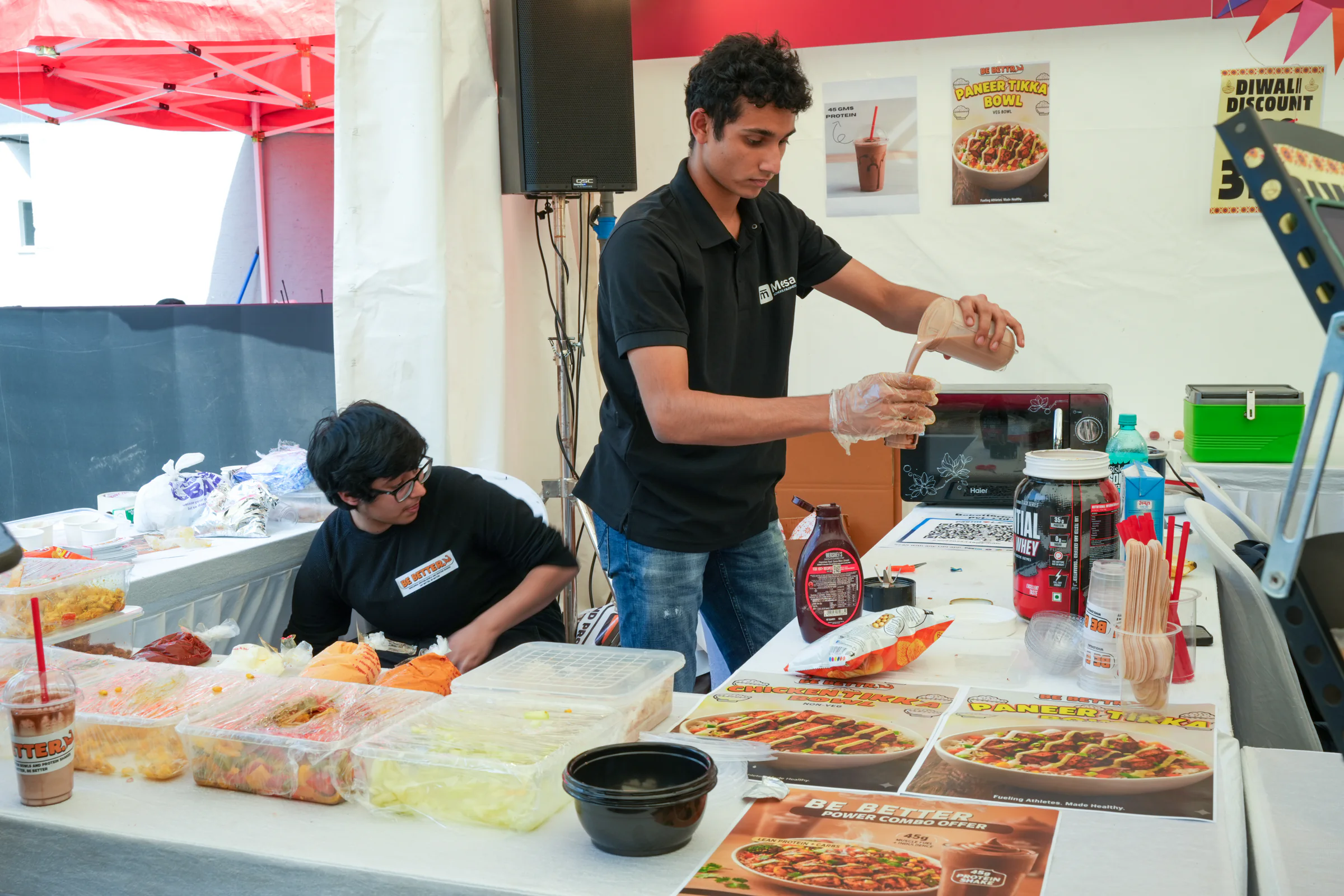
Consider a student interested in food. The first decision could be whether to sell a snack at an event, offer a weekly delivery or approach a local retailer. Each option creates different questions about the customer, packaging, price, repeat purchases and working capital. This is an illustrative learning example, not a claim about a particular student business.
The work becomes a cycle: investigate the need, make a small offer, observe the response and decide what to change. Business subjects help you interpret the result. Marketing explains the audience and channel; finance clarifies the economics; operations helps you fulfil the promise.
Comparing routes after school
| Route | What it can offer | Questions that help you compare |
|---|---|---|
| A university degree with entrepreneurship activity | Academic study and a university qualification, with projects or enterprise activity depending on the course | How much customer work and business building is included? What are the award and future-study requirements? |
| A specialized practical program | Structured projects, venture experience and access to people doing operating work | What is the qualification, practical workload, feedback process and total cost? |
| Building alongside formal study | A way to test an idea while continuing an academic route | Can you manage both commitments, and where will you get feedback? |
| A family business with structured responsibilities | Access to customers, suppliers, operations and business decisions | Can you own a defined project and review it with someone experienced? |
| Startup work or an internship alongside learning | Exposure to real priorities, deadlines and teamwork | What will you be responsible for, who will guide you, and how does it fit your education? |
Programs within each route vary. Compare the actual curriculum, qualification, cost and practical work rather than relying on the label alone. You may also combine routes over time.
Try a small project before choosing a program
We suggest starting with a manageable experiment. Choose a problem you can investigate, speak with people who face it, and create a small test of your idea. A service, sample product or simple prototype can be enough.
For instance, you could compare two ways of offering the same service and record the response. Track the time and cost involved as well as any money received. Afterwards, explain what customers valued, where the offer failed and what you would test next.
The exercise can help you understand which parts of business you enjoy. Some students discover an interest in selling, others in product design or operations. It also gives you concrete questions to bring to a college visit or information session.
Three ways to think about fit
You want to explore entrepreneurship
Look for a route that gives you business foundations and repeated chances to test ideas. You do not need to settle on a lifelong business concept before exploring customer problems. Ask how the course supports a student whose first project changes direction.
You expect to work in a family business
Connect your learning to a real question in that business: improving a sales channel, understanding inventory, comparing margins or reviewing a customer experience. A defined project makes it easier to apply what you study and discuss the results with the business team.
A particular degree or future course matters to you
Begin with the qualification required for that next step. Then compare practical entrepreneurship opportunities within or alongside the academic route. A program’s business-building experience and its formal award should both be clear before you enrol.
How we approach entrepreneurship at Mesa School
Our UG program is a four-year, full-time residential experience in Bengaluru. We combine business foundations, 75+ founder-led cases, 150 hours of AI learning and exposure to 25+ AI tools with products, ventures and startup internships.
Our building experiences include a D2C brand through Build Your Own Business, an AI product through Build Your Own Product and a content channel through Creator Garage. In the final year, students can take a further internship or work longer on a venture; Mesa Startup Lab participation requires selection.
Selected MSL ventures receive support in AI and technology, D2C or services, including weekly mentorship, operator guidance, workspace and fundraising preparation. Selection considers the founder and venture together, with no single criterion treated as a prerequisite. Actual investment remains a separate decision.
We award a certificate of completion for our non-degree UG program. Students may separately pursue an online BBA, commonly through NMIMS or IIM Bangalore or another distance-learning university, under that provider’s admissions and academic requirements.
What our current students have done
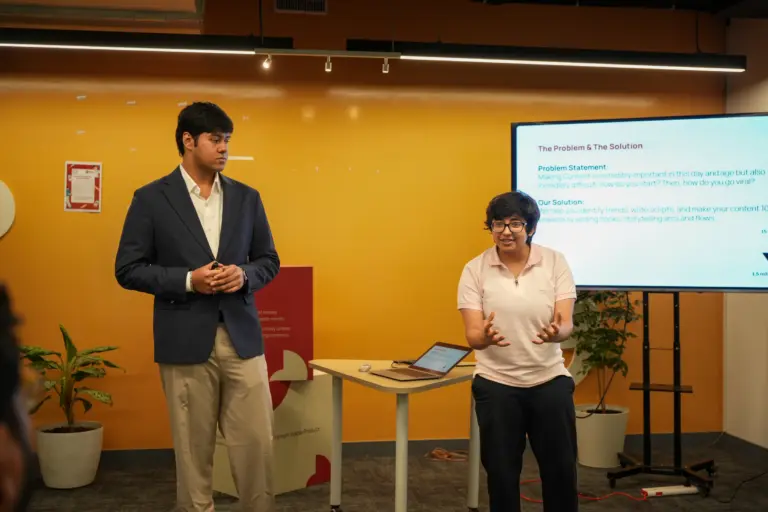
During our first cohort’s eight-week Build Your Own Business (BYOB) period, 24 teams of approximately four to five students each generated ₹75 lakh in collective business revenue. That is not profit or a payment to each student.

Saras Che began in our first cohort’s BYOB period, moving from idea to suppliers and brand launch and generating ₹5 lakh in revenue during those eight weeks. Arihant’s public account describes the practical work of selling the product and developing retail relationships. Explore the brand and Arihant’s account for a closer look at that work.
These examples show the work and choices students make while the UG program is underway. Our founding cohort runs from 2025 to 2029, so UG graduate placement and salary outcomes are not yet available.
Making your comparison useful
For each route you shortlist, put the same information side by side:
- The qualification awarded and who issues it.
- The business subjects and practical work you will undertake.
- The way teachers, mentors or supervisors review the work.
- The opportunities to speak with customers and work inside a business.
- The full cost, including housing and optional experiences.
- The time you can devote to building alongside academic requirements.
- The future-study or career options important to you.
For families considering August 2027, our currently published four-year UG program fee is ₹48 lakh, with accommodation and optional immersions charged separately. A separate university degree has its own fees. Confirm the charges and eligibility for your offer with Admissions.
Frequently asked questions
Do I need an existing startup idea?
You can begin exploring entrepreneurship by learning how to identify and test a problem. For Mesa School, discuss your interests and any work you have tried during the admissions process; the current application requirements are on our UG page.
Do I need a business degree to become an entrepreneur?
There is no single educational route into entrepreneurship. A degree can provide academic learning and future eligibility, while business building develops practical experience. Choose a route that addresses both your learning needs and any qualification requirements you have.
What happens if my first business does not work?
Use the experience to understand what failed: the customer need, offer, price, channel or execution. The next step may be a revised venture, a different project or a role inside another business. Our even-semester internships give students another way to build that operating experience.
Does Mesa School promise funding?
Our program includes business-building experiences and an MSL application route. MSL participation requires selection, and investment is a separate decision.
How can I explore Mesa School?
Review the UG program page and current brochure, then attend the UG information session to discuss whether the learning model fits your goals.