Content reviewed:
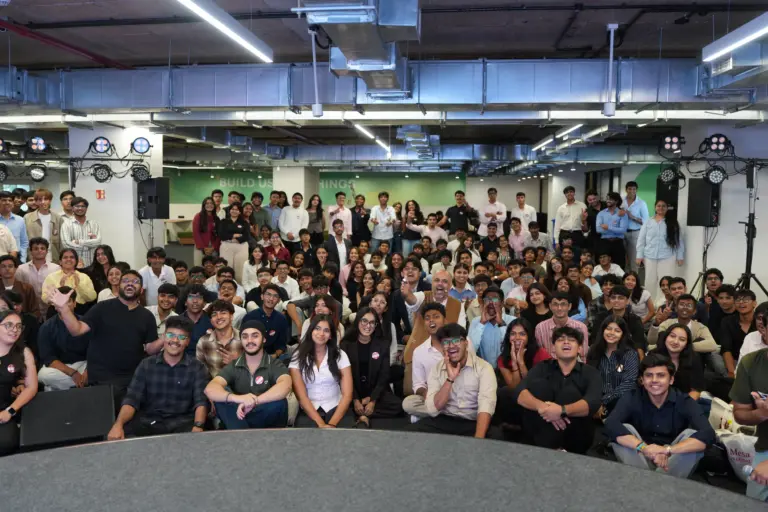
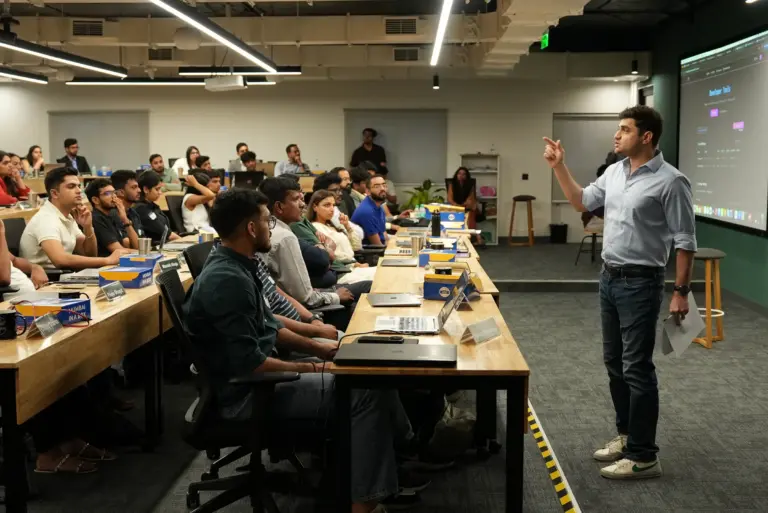
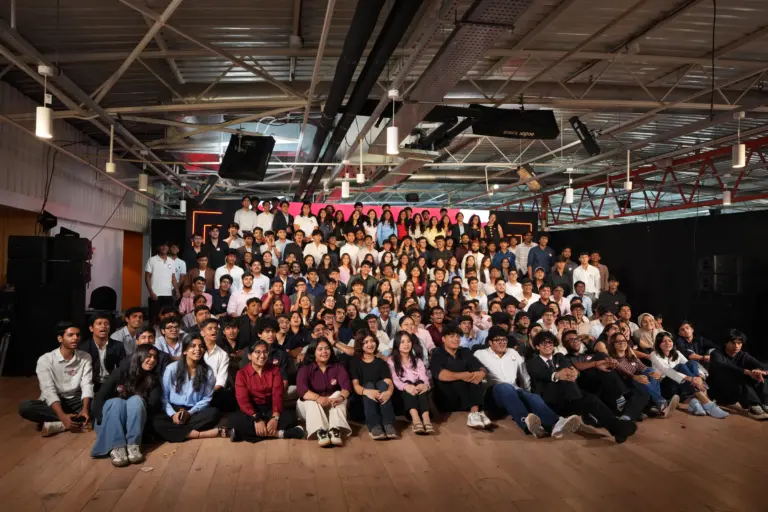
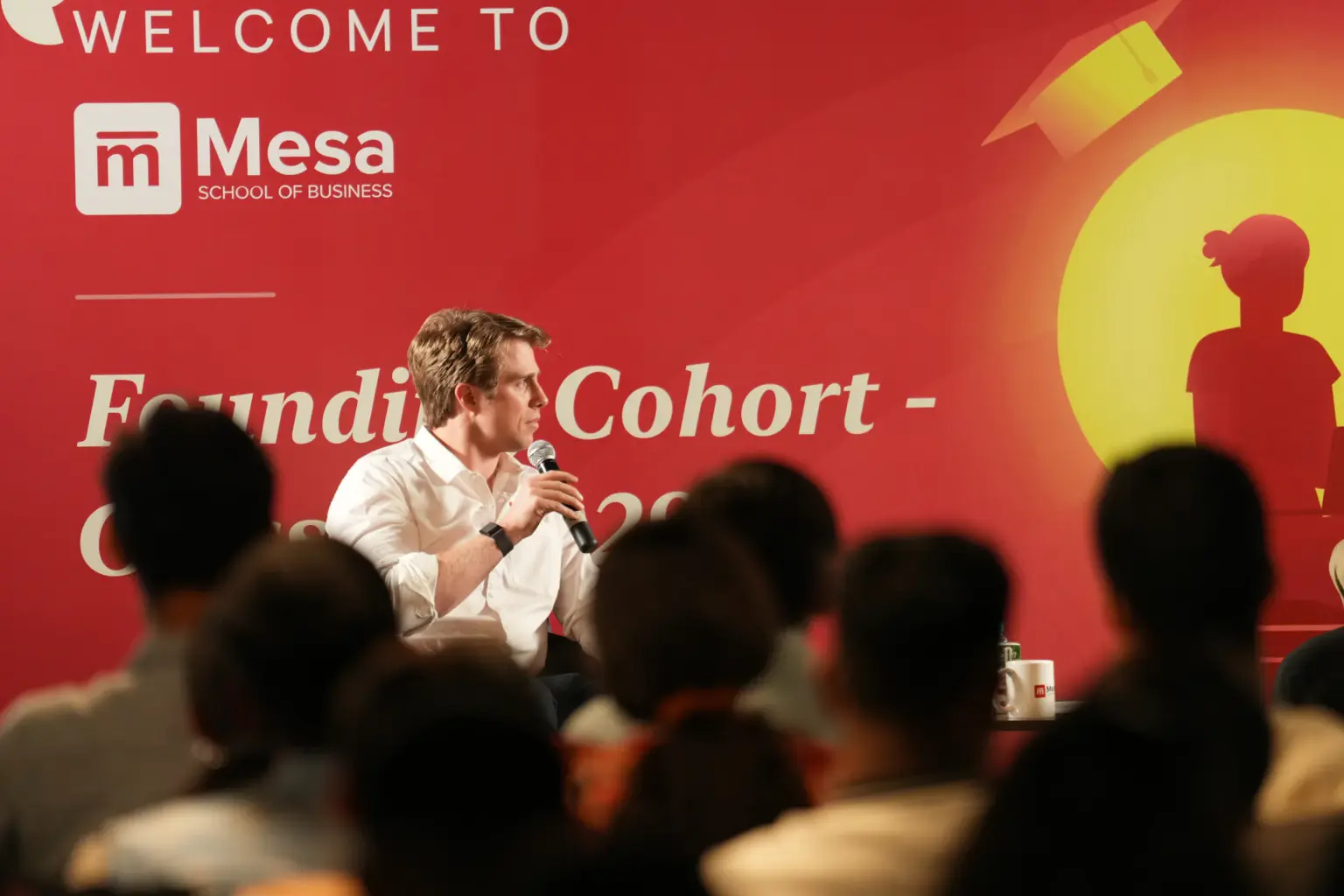
Our founding undergraduate cohort at Mesa School of Business began in 2025 and is expected to graduate in 2029. Their work already spans business building, AI products, internships and a completed global immersion. This page brings those experiences together so you can explore what practical learning looks like while the program is underway.
The examples below concern current UG students. Graduate placement and salary outcomes will become a separate part of the picture after a cohort completes the program.
Building businesses with customers
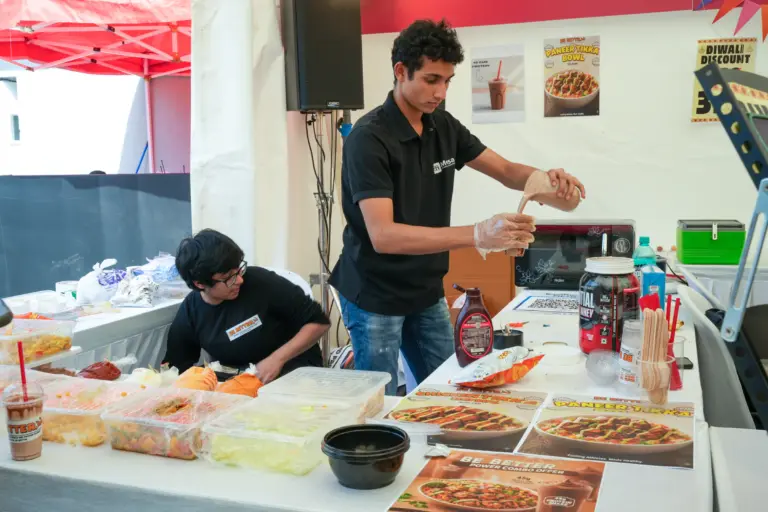
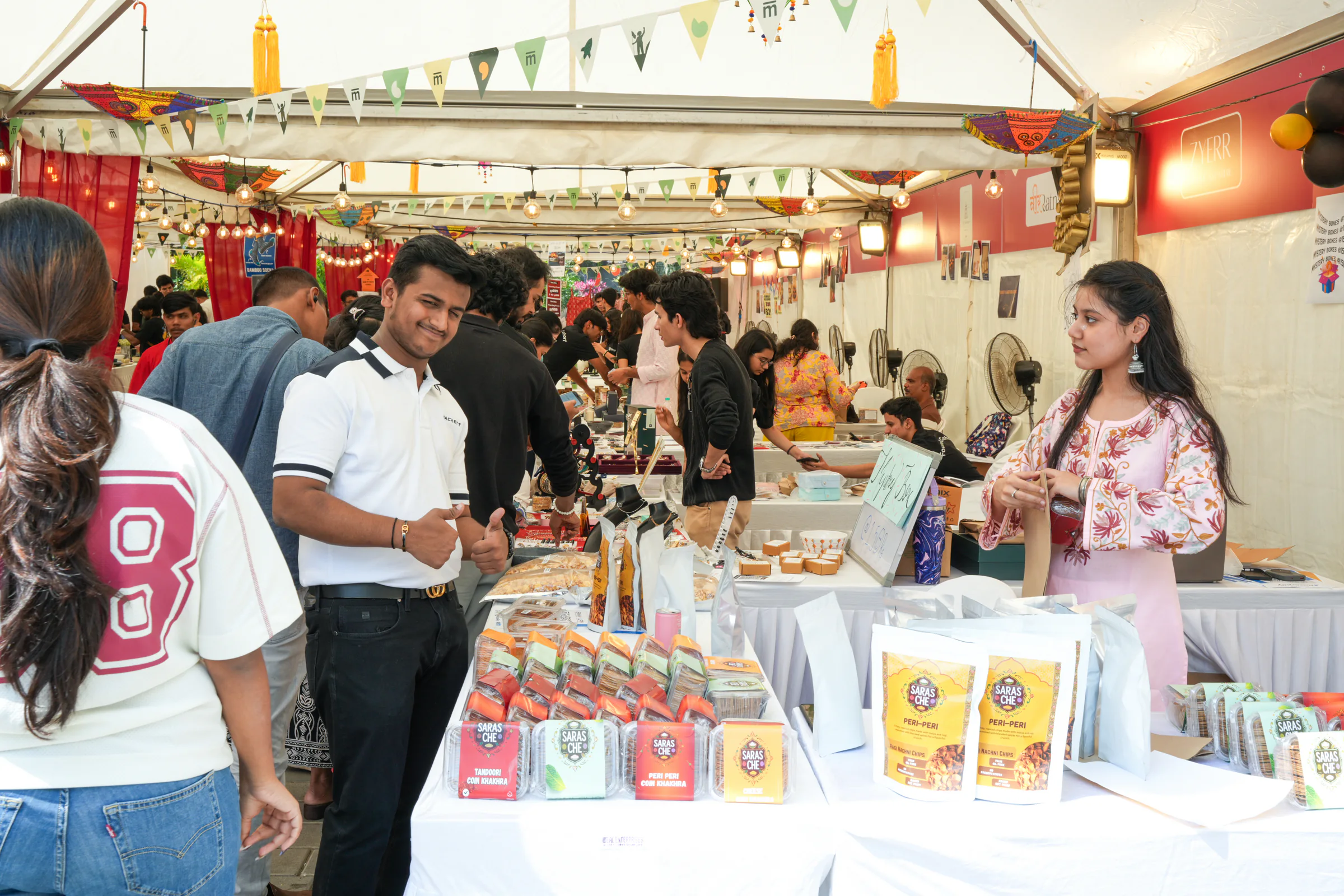
In Build Your Own Business (BYOB), our students develop a direct-to-consumer brand and take it to market. They work through product choices, pricing, customer conversations, selling and operations in the same eight-week experience.
In our first cohort, 24 BYOB teams of approximately four to five students each generated ₹75 lakh in collective revenue during the eight-week BYOB period. The amount is business revenue, not profit or an individual student’s earnings.
The experience creates useful questions for a student to answer: Who chose to buy? What did it cost to fulfil the order? Which channel worked? What should the team do differently next? These decisions connect a venture with the business subjects studied alongside it.
Saras Che and the work of selling a consumer product
In our first cohort, students including Aaradhy Jani and Arihant Jain started Saras Che during BYOB. The team moved from an idea to finding suppliers and launching its snack brand, generating ₹5 lakh in revenue during the eight-week BYOB period. The figure describes revenue, not the founders’ profit or income.
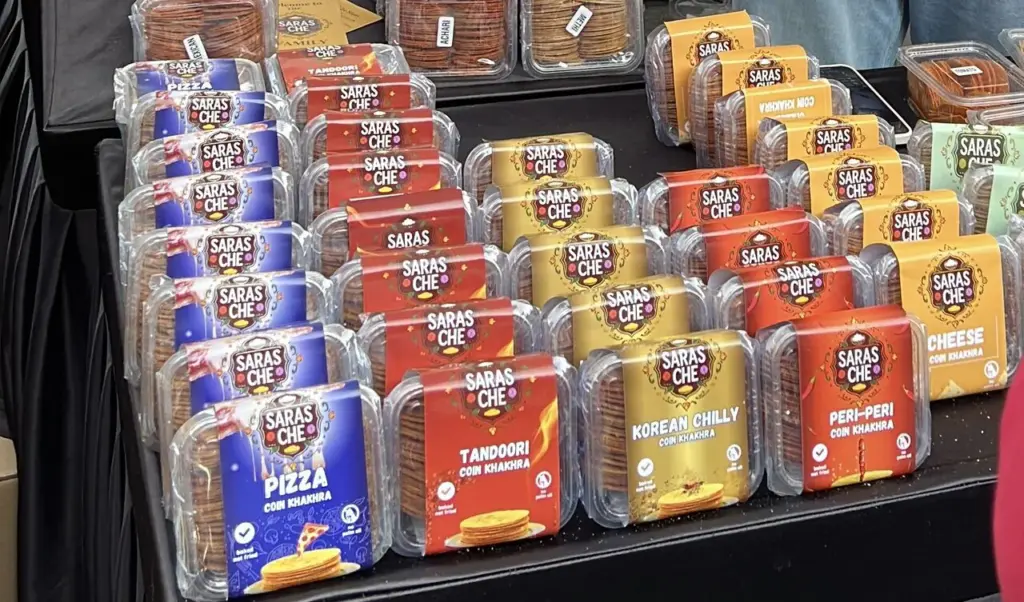
In his account of developing the retail channel, Arihant describes taking samples to shops and learning from retailer responses. It is an example of the work behind a consumer business: understanding both the person who buys the product and the retailer who stocks it.
Arihant’s public account and the Saras Che website provide a way to explore the business beyond its name. His account shows the retailer conversations and decisions behind the brand.
Krrish Goel and a tool for exporters
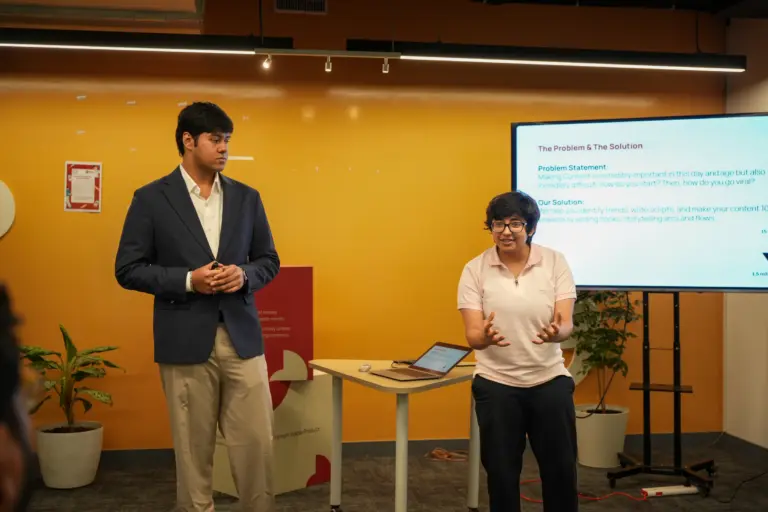
Krrish Goel, a UG student, built an exporter tool during the founding cohort’s immersion experience. His public project account names the prototype TariffLens and explains the exporter problem behind it.
Krrish drew on his family’s experience with cross-border logistics and changing tariffs to build TariffLens, a prototype for exporters. At the AWS Harness Engineering hackathon in San Francisco, he reports placing in the top six among more than 300 participants. His account describes a hackathon prototype; it does not establish commercial adoption or an operating product.
Working inside startups
Examples of companies where our UG students have interned include Temple, Zomato, Grapevine, Hyperpure, Emversity, goSTOPS, Donatekart, Himland Capital Advisors, Ultrahuman and Frido. This is a selection of hosts, not an exhaustive list or a promise of a particular placement.
Our three regular Founder’s Office internships take place in even semesters: Semesters 2, 4 and 6. In the final year, students can pursue a further full-time internship or work on a venture, with Mesa Startup Lab participation subject to selection. Hosts, roles and responsibilities vary by opportunity.
We report an average internship stipend of ₹20,000 per month and a highest reported stipend of ₹70,000 per month. Stipends vary with the student’s profile, performance, interviews, assignments, effort, network and role; these reported amounts are not a standard payment for every student.
Our program brochure outlines the internship sequence. Admissions can explain the current roles and selection process for your intake.
Venture support and founder pathways
Students who want to continue building can apply to Mesa Startup Lab (MSL). Selected UG ventures receive mentoring, operator guidance, workspace and investor-readiness support; investment is a separate decision. Explore our MSL portfolio profiles for Whisperwave, AI Job Hunter, Saras Che and Swirlo Desserts.
Some of our first-cohort students have also been incubated in founder ecosystems: Dyumna Madan and Noklu with Foundery, and Surya Maddula and Aadhit Saravanan with Entrepreneur First. Those experiences are distinct from MSL selection and do not imply investment for every student.
Learning beyond the Bengaluru campus
Our first cohort completed the program’s first global immersion window. Its six-week Silicon Valley stay based in Mountain View is an example of a completed format, not the fixed duration or itinerary for every opportunity. We are planning another window in an even semester in 2027 for Cohorts 1 and 2.
On that first immersion, our students visited or interacted with Entrepreneur First, Y Combinator, Microsoft and Adobe, including a creator-perspective pitch session at Adobe. They visited Stanford and met founders from its incubator, and also visited technology offices such as Patronus and interacted with people from Google DeepMind. Krrish’s exporter prototype emerged in this broader learning setting.
All four immersion opportunities are optional and carry additional fees. We share the itinerary, participation details and price when a visit is planned; Admissions can clarify a current offering.
Connecting student work with your interests
If you are interested in consumer businesses, start with the customer, product and channel decisions in a venture story. If you are interested in AI and products, start with the problem a prototype addresses. If startup work interests you, explore the role, responsibilities and feedback in an internship.
Our program brochure shows how ventures, products and internships connect with the four-year curriculum. For current fees, admissions and the separate degree route, use the published UG program information and discuss the terms that apply to your intake with Admissions.
Frequently asked questions
Has a UG cohort graduated?
Our founding cohort is due to graduate in 2029. The work shown here concerns current students rather than graduating UG career outcomes.
What does the BYOB revenue figure cover?
It covers ₹75 lakh in collective revenue generated by our first cohort’s 24 teams during the eight-week BYOB period. Saras Che’s ₹5 lakh is a separate venture example from the same period.
Can I explore the student projects directly?
Yes. The Saras Che and Krrish accounts linked above provide first-person descriptions of their work.
How can I learn more about the internship route?
Use our current program brochure and join the UG information session to discuss the internship sequence and the kinds of roles relevant to your interests.