
Case study
AI Integration Case Studies
Break down how a real company put AI into its product or operations, and what it changed.
Learn AI by applying it to real business problems, building products, and shipping solutions.
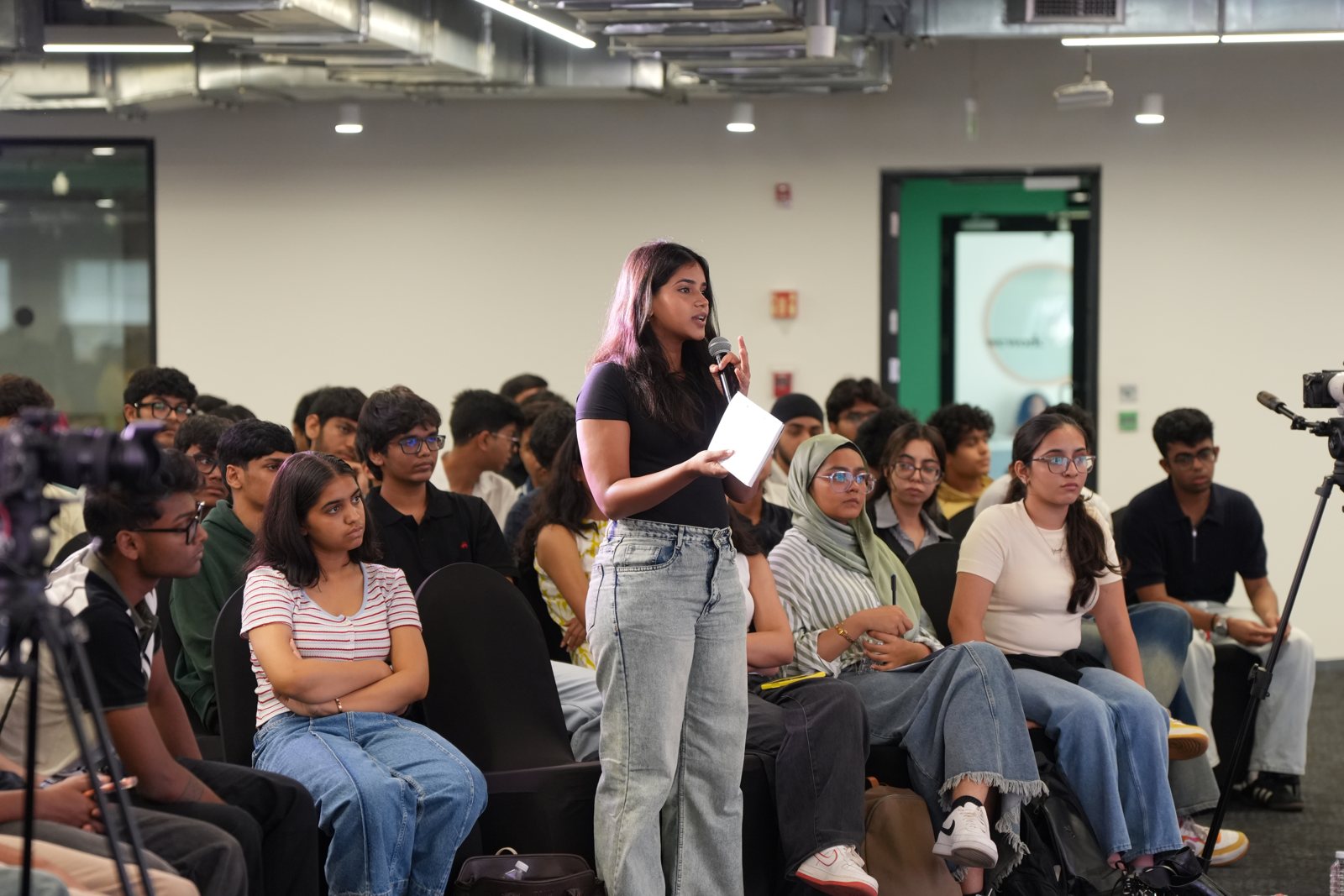
Of AI learning and building
AI tools students get fluent in
Terms, from no-code to fine-tuning
AI products launched by the Mesa students in year one
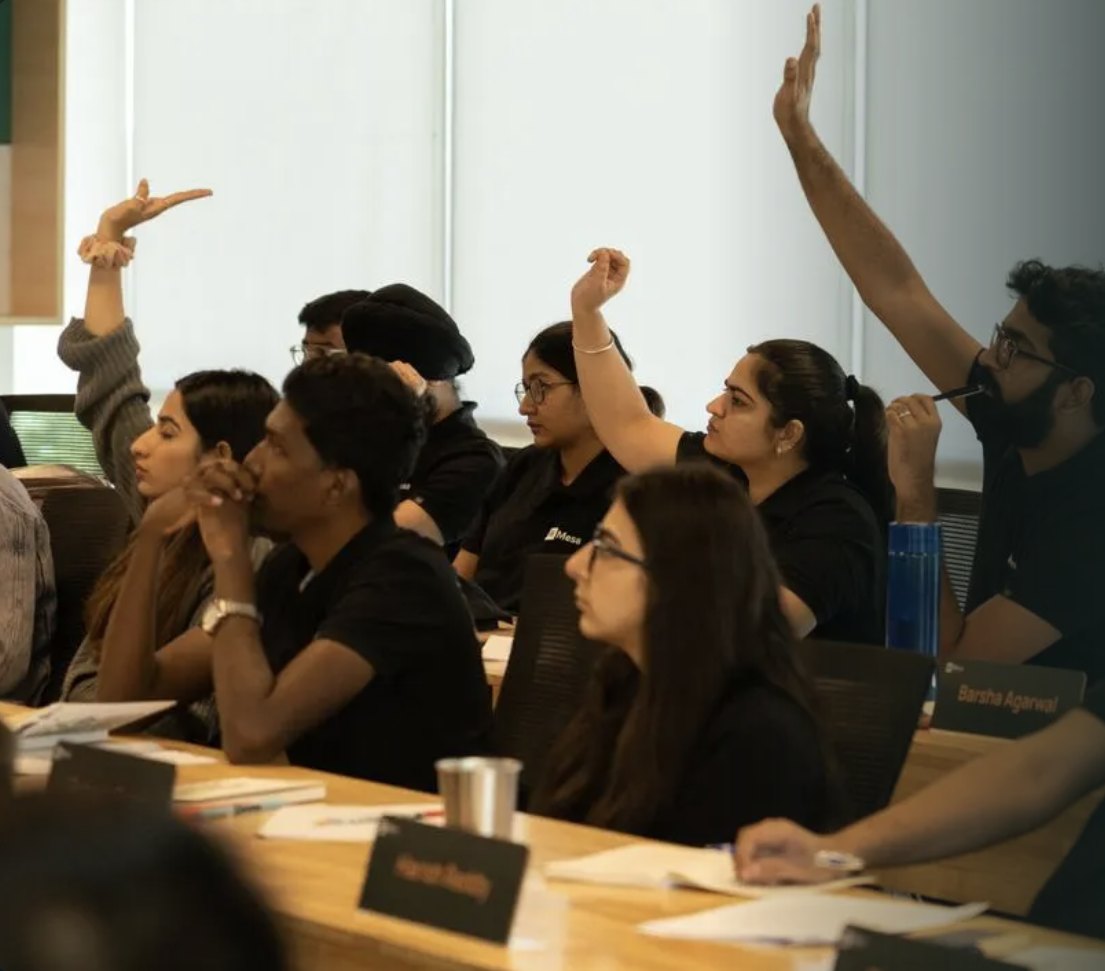
Every student builds with AI, with projects tailored to their baseline and target role.
Learn from both business and technical mentors at every AI workshop and hackathon.
Present projects to external founders and operators every term. Top builds get featured publicly.
Get actionable feedback on every submission within 48 hours.
The thesis product goes live on Product Hunt and is pitched to investors.
Every term ends in builds that are tested on real companies, real users and real revenue, plus a hands-on AI Building Test.
Break down how a real company put AI into its product or operations, and what it changed.
Take a real brief from a partner company and hand back a working AI build.
Build a working AI solution for one sector or function. A product, not a deck.
Take an AI product to market: position it, price it and find its first users.
Pick a product you use every day, then design and prototype the AI features it is missing.
Put your build in front of real users, watch what they do and ship the fixes.
Turn a build into revenue, from pricing and a paywall to the first paying customer.
Every term, founders and operators unpack real AI products, sharing how they're built, deployed, and scaled.
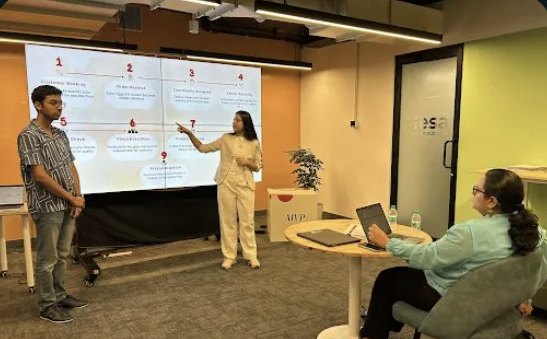
See how a live AI product really works, and what broke.
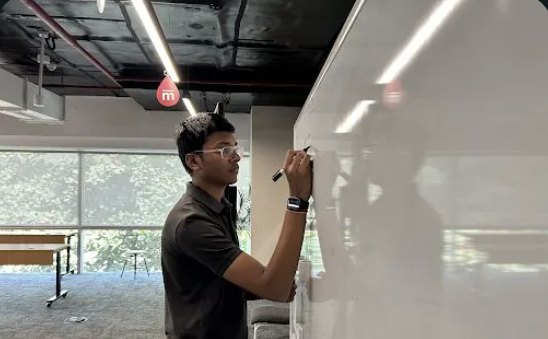
Tear down a real AI product's stack and moat.

Build a working voice agent, from speech-to-text to speech.
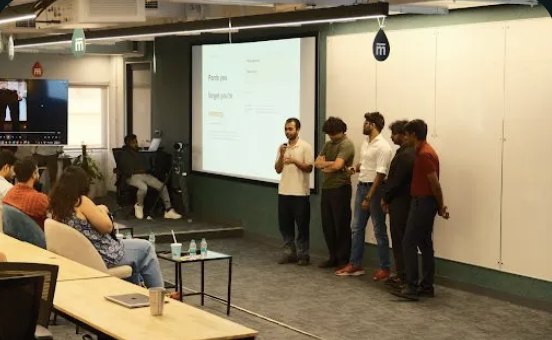
Position and sell an AI product the AI-native way.
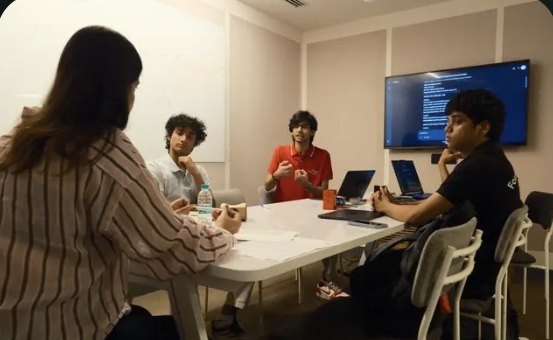
Handle AI objections and run a POC that closes.
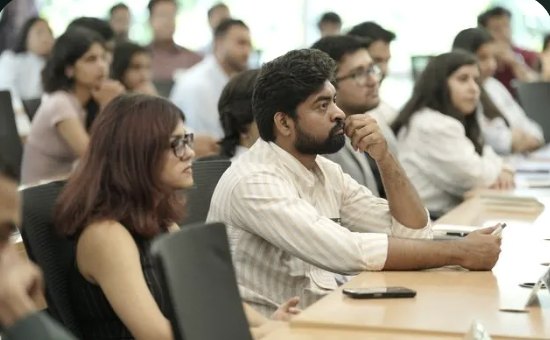
Find where AI is creating roles in finance, health, legal, ops and more.
Operators who build with AI every day run the workshops, sit in on hackathons and judge the AI Showcase.
Explore workshopsFounder, BlitzAI

AI & Analytics Consultant with experience in applied AI and analytics; associated with IIM Bangalore.


Seasoned AI Practitioner

Works with LLMs, conversational AI, and AI security, with experience exploring frontier AI technologies.



Head of AI Research, Domyn

Leads financial AI research and mentors learners in Generative AI, LLMs, and machine learning.


AI & GenAI Product Leader, Haleon

Builds and scales AI-powered products, from early-stage innovation to enterprise-level deployment.



Product Manager & GTM Lead, Zivy

Builds technology products and supports AI founders through buildathons, product demos, and builder communities.


Business & Growth Operator, Lokal

Teaches practical applications of AI in business, growth, and operational decision-making.


Product Lead, Grapevine

Built AI-powered hiring products, including a job discovery agent that reached 100K users.


Founder & Chief Architect, 302Labs

Builds AI-powered business automation systems and has delivered AI training at Mesa School of Business and IIM Bangalore's NSRCEL.


Data & Applied Scientist, Microsoft

Builds production-scale AI/ML solutions and award-winning AI agents, including an AI education copilot.


AI Product Manager, Swiggy

Builds enterprise GenAI products and agentic AI workflows for large-scale business operations.


Students get fluent in the tools AI-native teams use every day, from no-code builders to agent frameworks. The stack is reviewed every cohort.
Build a full-stack AI product in 8 weeks.
For those looking to move closer to technology and into AI-first roles. Build and deploy a real AI product, test it with real users, measure its impact and develop a business model to monetise it, creating proof of work for your next role.
Judged at the AI Showcase by outside founders and operators
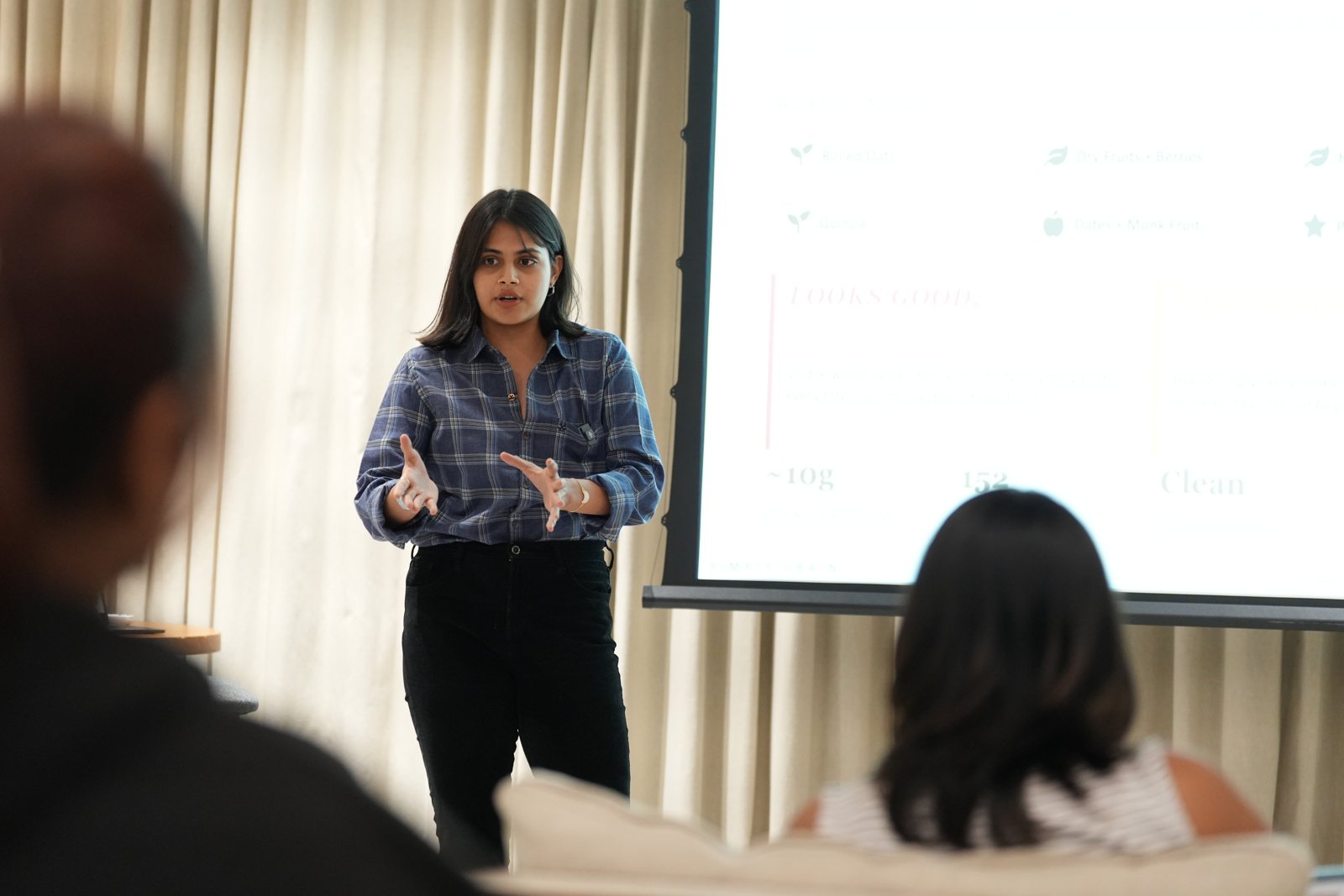
Pick a problem you have seen yourself: at work, in an internship, or in your BSL project.
Design the workflow, add a simple front end and a database.
Deploy it as a live link anyone can open.
Find real users. Report what worked, what broke and how many used it.
Work out how it could earn, and present the business model.
From the BYOP sprints
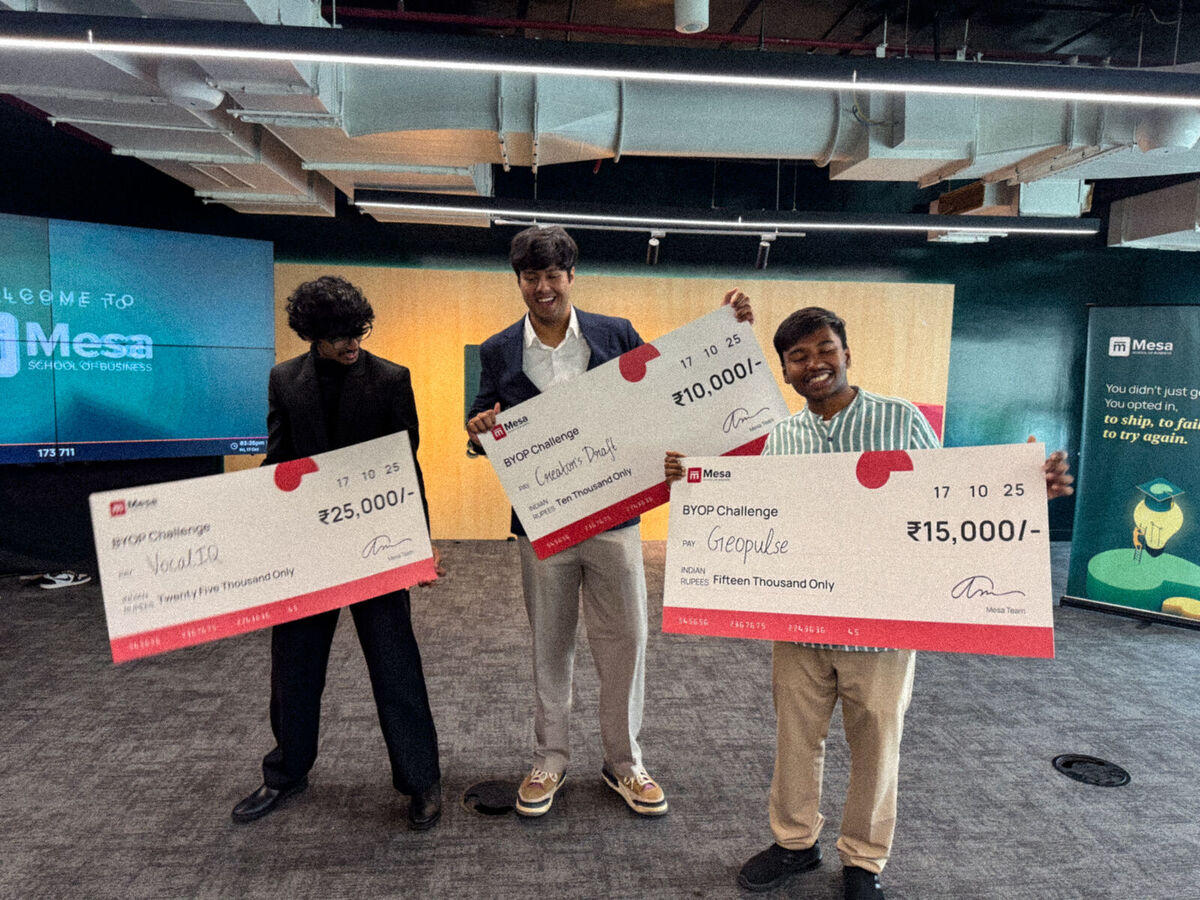
Cash prizes for the top AI products of the sprint.
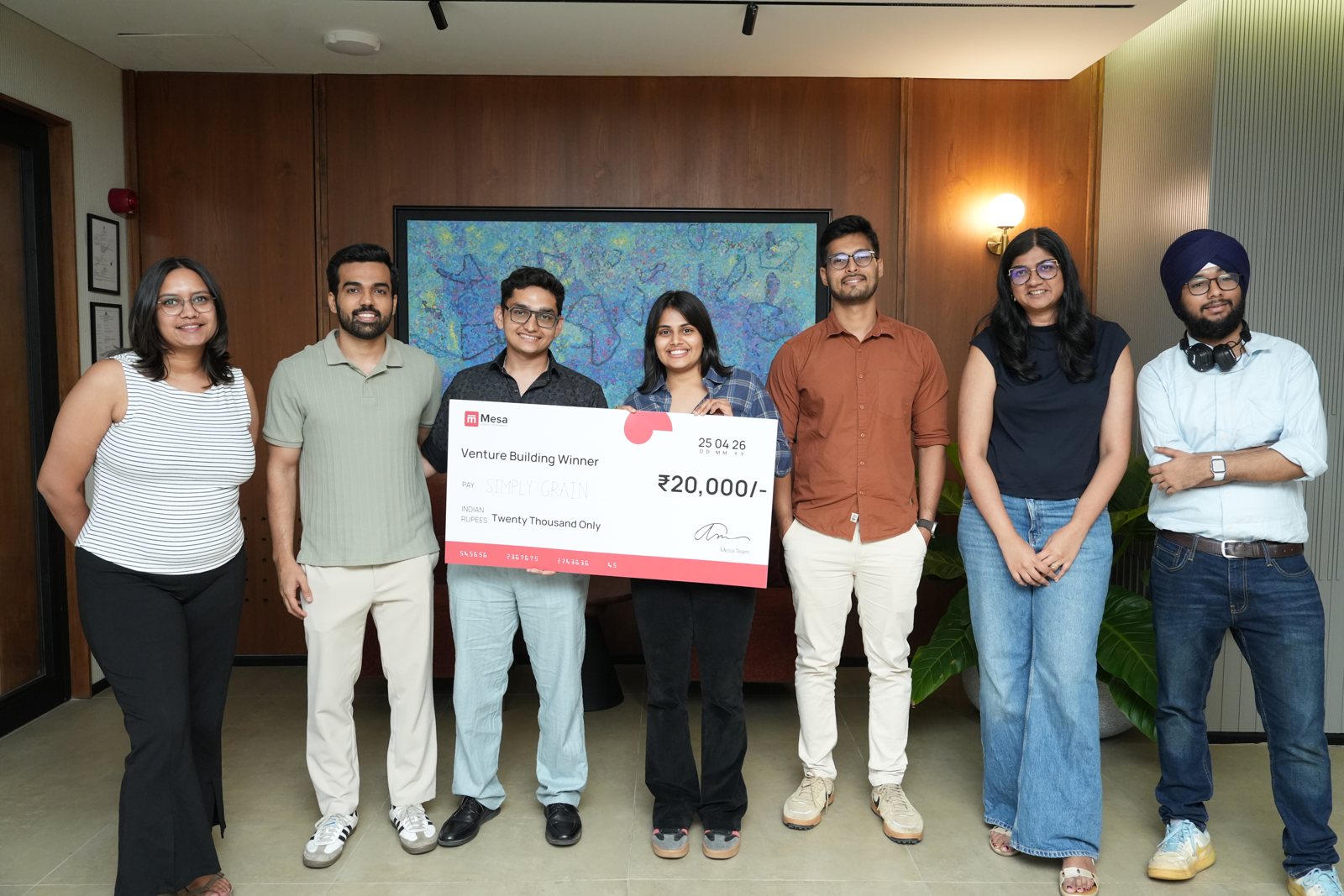
50+ AI products launched
By Mesa students in their first year.
₹10L/month
Up from ₹1L a month, between December and January
Built with Claude Code by Ashutosh Lath.
1,300
Users in its first 7 days
An AI retirement planner taken from MVP to pitch-ready in under 6 weeks, by Pratik Rajpurohit and Vardhraj Songara.
8+
Companies sold to
AI-native SaaS that turns messy sales conversations into clear next steps for Indian B2B teams. Built by Dhroov Joshi.
Student showcase
Listens to calls and surfaces real-time answers from your company documents.
Streamlines fund requests with one-click approvals or clarifications.
Extracts bill details and drafts ready-to-send reimbursement emails.
Shows brands how visible they are inside AI search results.
Maps customer requirements to the fewest suppliers for maximum fulfilment.
Summarises customer feedback and flags product issues.
Auto-organises customer orders, preferences and payments.
Auto-organises customer orders, preferences and payments in one place.
Builds personalised SIP and long-term wealth plans instantly.
Picks the best card based on spending habits, rewards and eligibility.
Builds your unique writing style guide and recreates posts in your tone.
Tailors resumes, scrapes listings and sends personalised cold emails.
Helps people master communication and self-presentation.
Analyses your LinkedIn and simulates real interviewer personas.
Finds people with your body type and reverse-engineers a plan for you.
Builds a personalised maths roadmap with diagnostics and smart mock tests.
Helps IBDP students prepare, correct essays and track progress.
Gives verse-backed, contextual guidance tailored to the user.
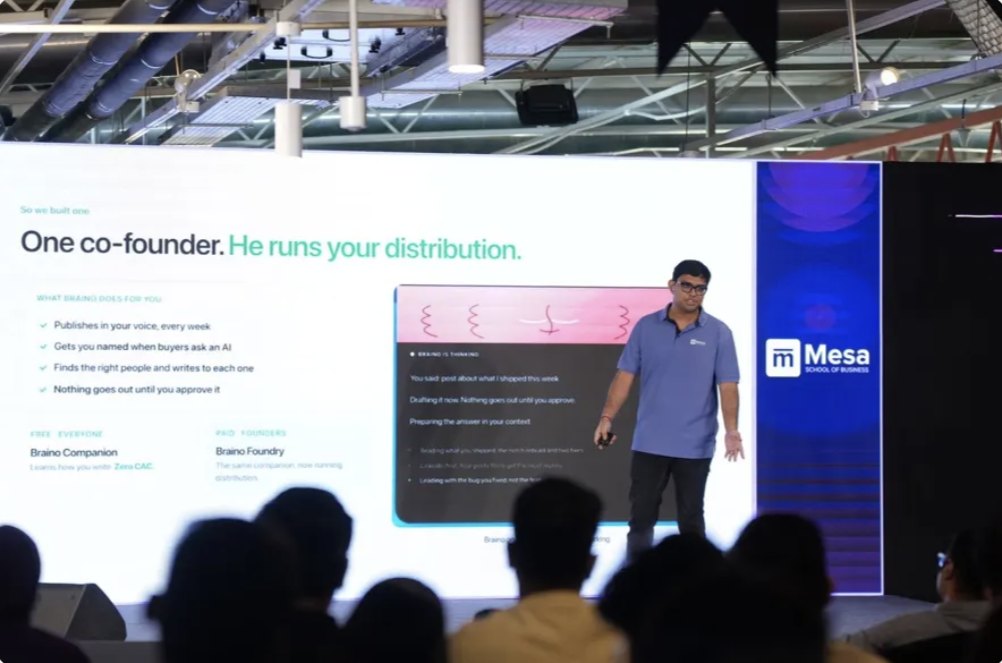
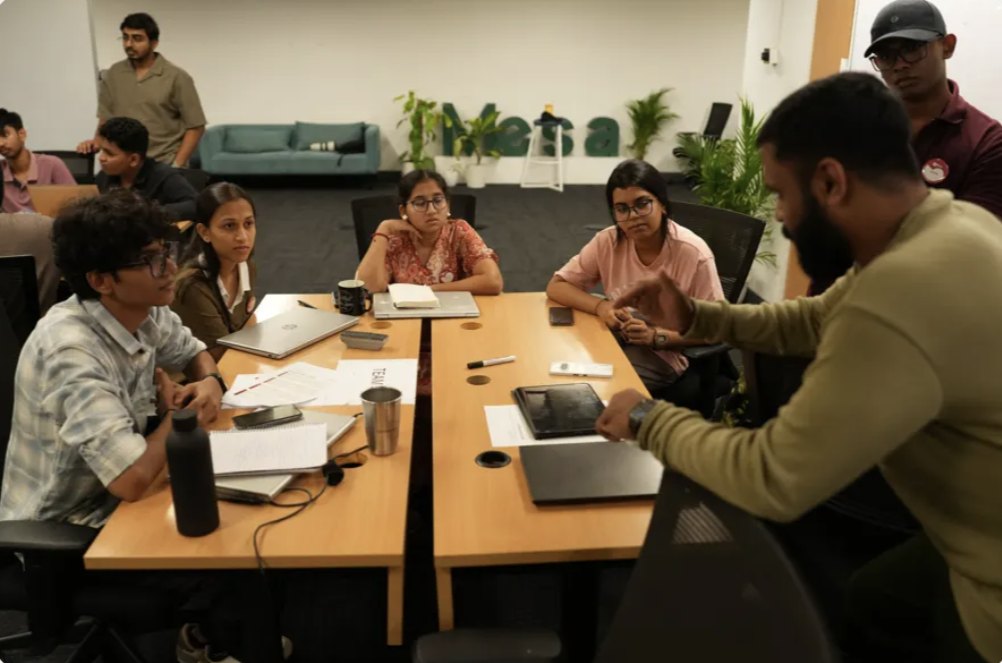
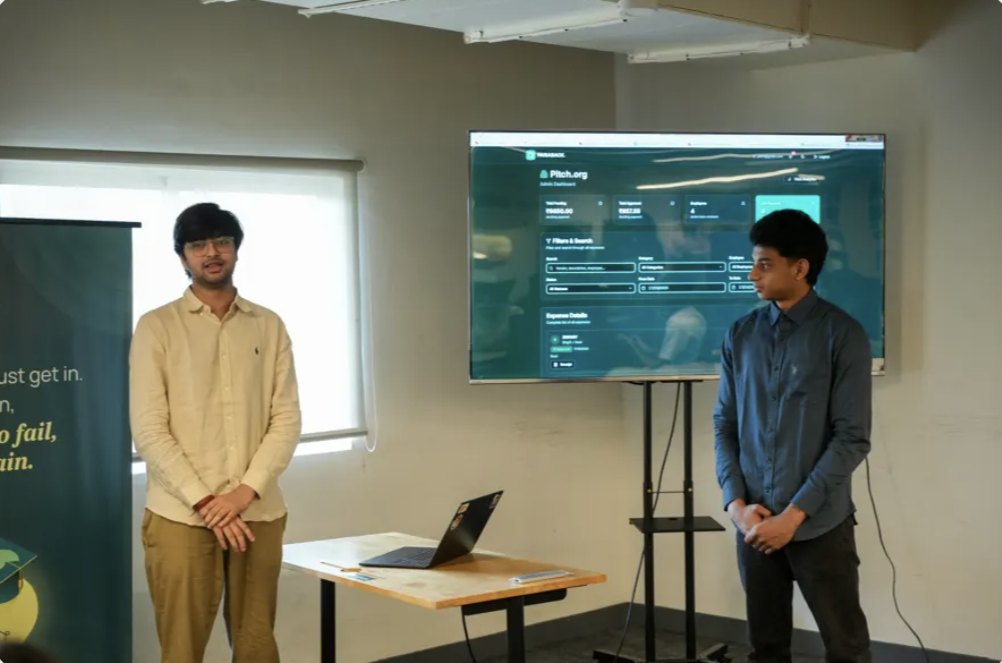
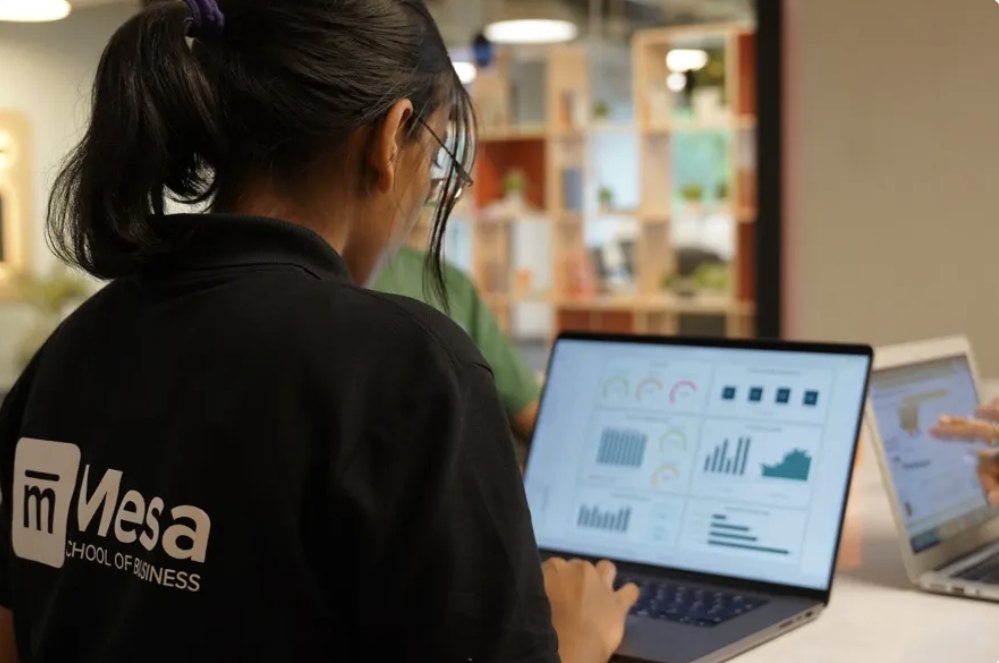
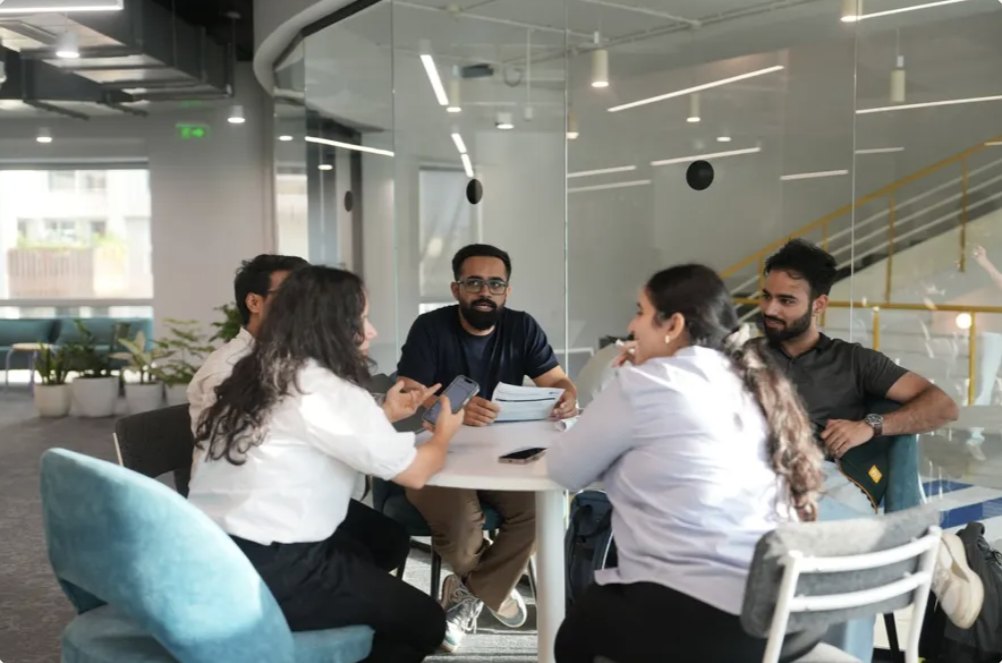
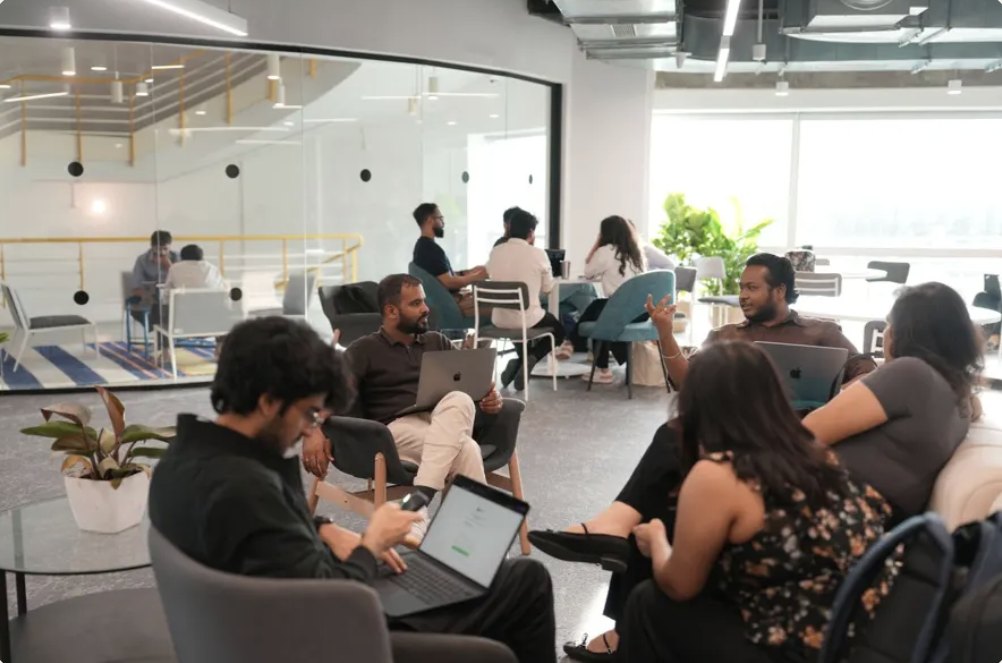
Inside the build sessions
No. Term 1 starts from zero, with prompt engineering, reading API docs and no-code app deployment. Vibe coding comes in Term 3, and fine-tuning and multi-agent systems follow from Term 4.
Building. Every course ends in something that works, and every build is deployed as a live link. Concepts are taught so students can build better, not to be memorised.
Some will. That's why we review the stack every cohort and teach the thinking underneath it: how to break a problem down, describe it clearly, verify outputs and design systems that don't break. Those skills transfer to whatever tool comes next.
The AI curriculum is 150 hours across six terms, running from no-code tools to fine-tuning, and students become fluent in 25+ AI tools along the way.
Practising operators and outside founders. They judge the AI Showcase each term and give the kind of feedback students would get on the job.
Six terms of AI, a product of your own, and Demo Day to pitch what you built.